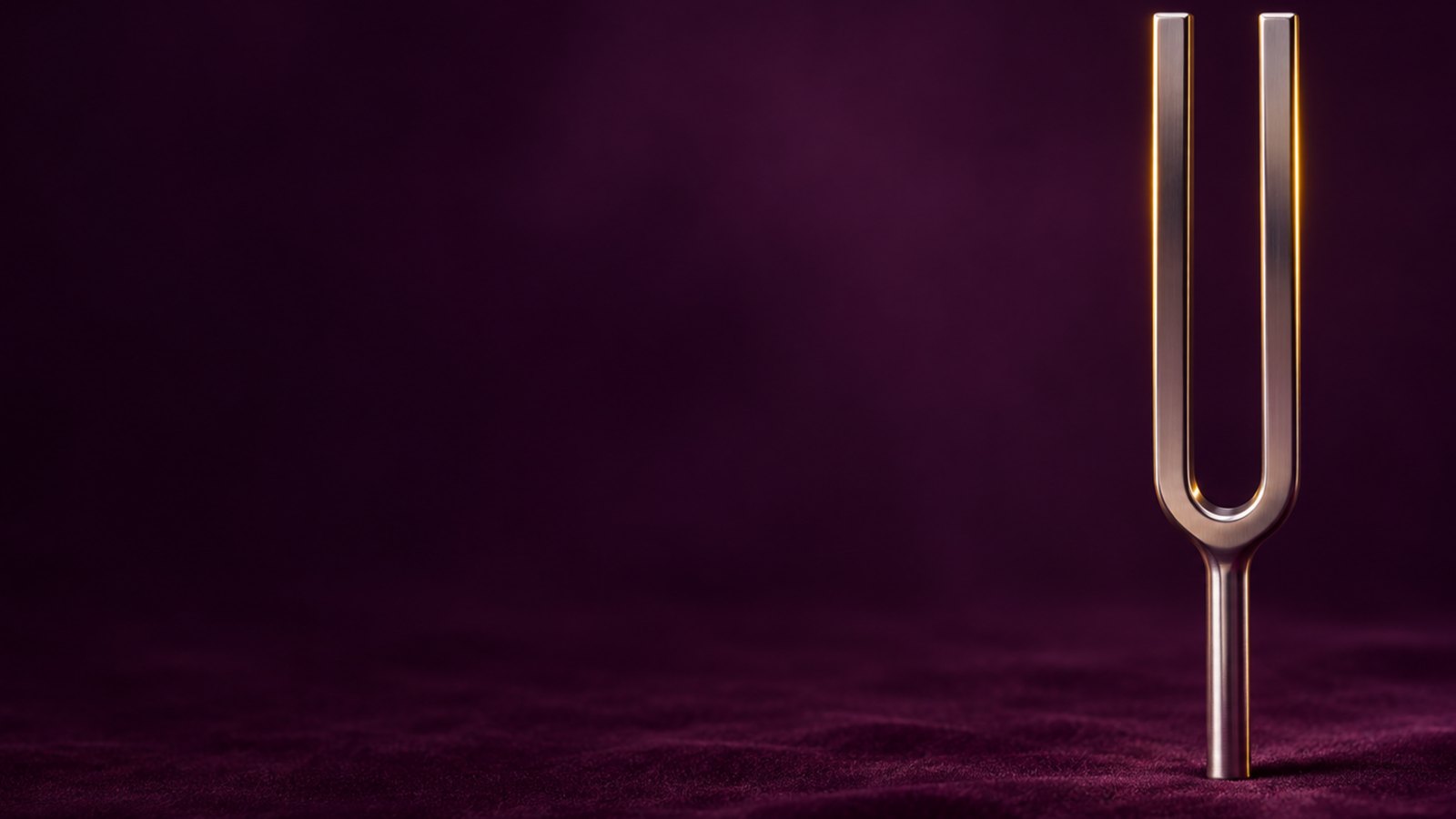
Sound & frequency
Sound healing & frequency
Tuning forks, chimes, bells and ten slow minutes of Earth Hum. Listen on purpose, at a soft volume.
Sound healing is a broad, informal name for using sound as a focus for rest, meditation and reflection: singing bowls, tuning forks, chimes, bells, gongs, drums and the human voice. The name is popular, but it is not a medical term. We use it the way most people do, to mean listening on purpose.
Different instruments give different experiences. A tuning fork rings one clear pitch you can hold close. Chimes and chime bars are bright and short. Bells and gongs are rich in overtones and fill a room. Many practitioners tune their instruments to particular frequencies, such as 432 Hz or 528 Hz, and give those numbers meanings. The meanings come from tradition and modern belief rather than research, so we share them as stories, and we tell you the measured pitch whenever we know it.
Start with Earth Hum, ten slow minutes of music with a gentle binaural beat that drifts from 7.83 Hz up to 14.1 Hz. Wear headphones: the beat only forms when each ear hears its own tone. Below it, play four real recordings, a C 512 Hz tuning fork, a chime tuned to A = 432, an A 440 fork and a 528 Hz chime bar, and hear the difference for yourself. There is also a short video of the Solar Bell, played by its makers.
Keep the volume soft, take breaks, and please don't listen to Earth Hum while driving. If loud or sustained sound ever bothers you, stop and keep sessions short. Further down you will find our guides to tuning forks, sound baths and the instruments themselves, and the tuned bells, tuning-fork sets and frequency player that iPyramids makes for its iTorus coils.
Partial preview · Coming soon. The shop and our products are on the way. Enjoy the music in the meantime.
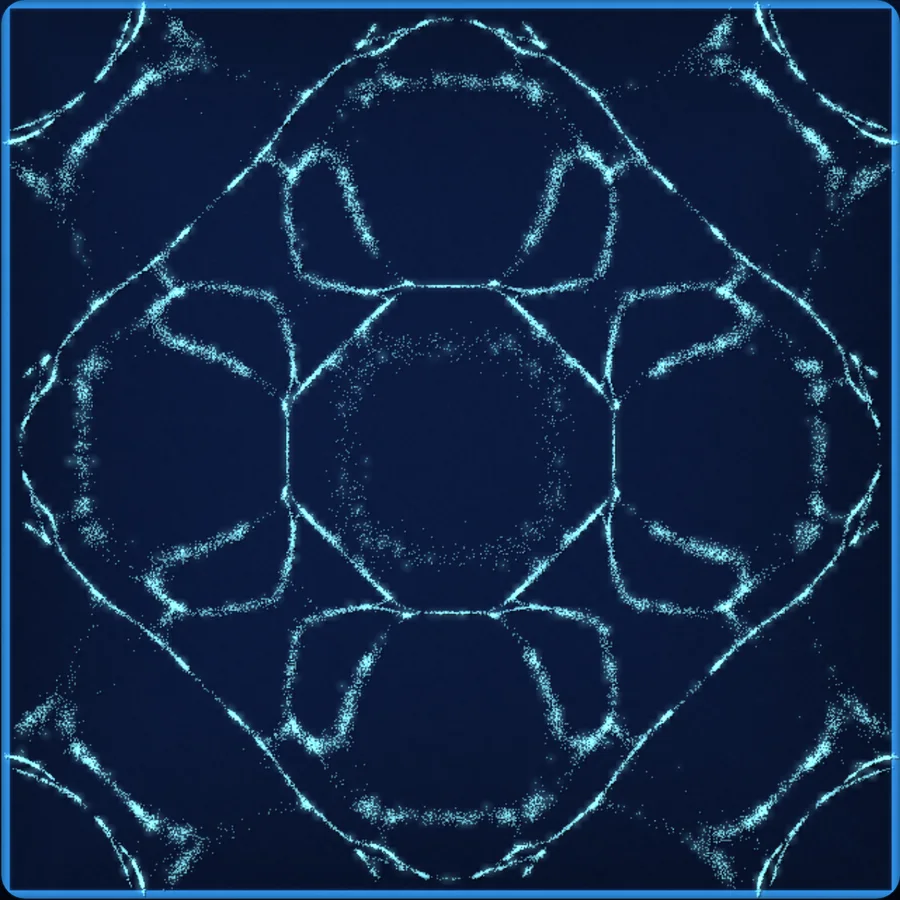
Grounding7.83 Hz
Now playing
Earth Hum
Ten slow minutes of warm pads, soft piano, a low cello and distant ocean, tuned to A. Underneath sits a gentle binaural beat that drifts from 7.83 Hz, the Earth's own Schumann resonance, up through 10.5 Hz to a clear 14.1 Hz as the piece ends.
Ten slow minutes of warm music over a gentle binaural beat that drifts from 7.83 Hz, the Earth's Schumann resonance, up to a clear 14.1 Hz.
Wear headphones. A binaural beat only forms when each ear hears its own tone. What's a binaural beat?Wear headphones for the binaural beat. Why?
Traditional and theoretical associations, shared for interest. Not medical claims.
- Wear headphones. The beat only forms when each ear hears its own tone.
- Keep it soft. Comfortable volume is all you need.
- Give it ten minutes. Sit or lie back, breathe slowly, and let it carry you.
What is a binaural beat?
How it works
Your left ear hears one low tone and your right ear hears another a few hertz higher. Your brain blends them into a soft third pulse that isn't in either ear. That pulse is the binaural beat. In Earth Hum it starts at 7.83 beats a second and slowly rises to 10.5, then 14.1.
Why headphones
Through speakers, the two tones mix in the air before they reach you, and the beat is gone. Any stereo headphones or earbuds will do. Keep the volume soft.
Where it comes from
German physicist Heinrich Wilhelm Dove first described the effect in 1839. Gerald Oster brought it back into the spotlight in 1973 with "Auditory Beats in the Brain" in Scientific American.
What the research says. Some small studies find people feel calmer while listening, but results are mixed and nothing is proven. Enjoy it as music for rest and focus.
Earth Hum is music for relaxation, meditation and focus. It isn't a medical treatment, and it doesn't replace care from a qualified professional. Please don't listen while driving.
Four real recordings
Hear a fork, a chime & a bell
Tap one to play it, tap again to stop. Each was measured, so you know the real pitch.
Hear it
Real recordings. We measured each one: the C fork rings at 511.7 Hz, the 432 chime at 864 Hz (its A an octave up), the A fork at 440.2 Hz, and the 528 chime bar at 530 Hz. “C 512 Hz tuning fork” by ScottFerguson1 (freesound.org), CC BY 3.0, trimmed and faded. “Calling Angels Carillón 432 Hz” by Godzilla101 (freesound.org), CC0. “Tuning Fork 440 Hz, Resonance Box” by jmuehlhans (freesound.org), CC0. “EBC-528-solo-06-pur” by the_very_Real_Horst (freesound.org), CC BY 4.0, high-passed, trimmed and faded.
3 guides
Read the guides
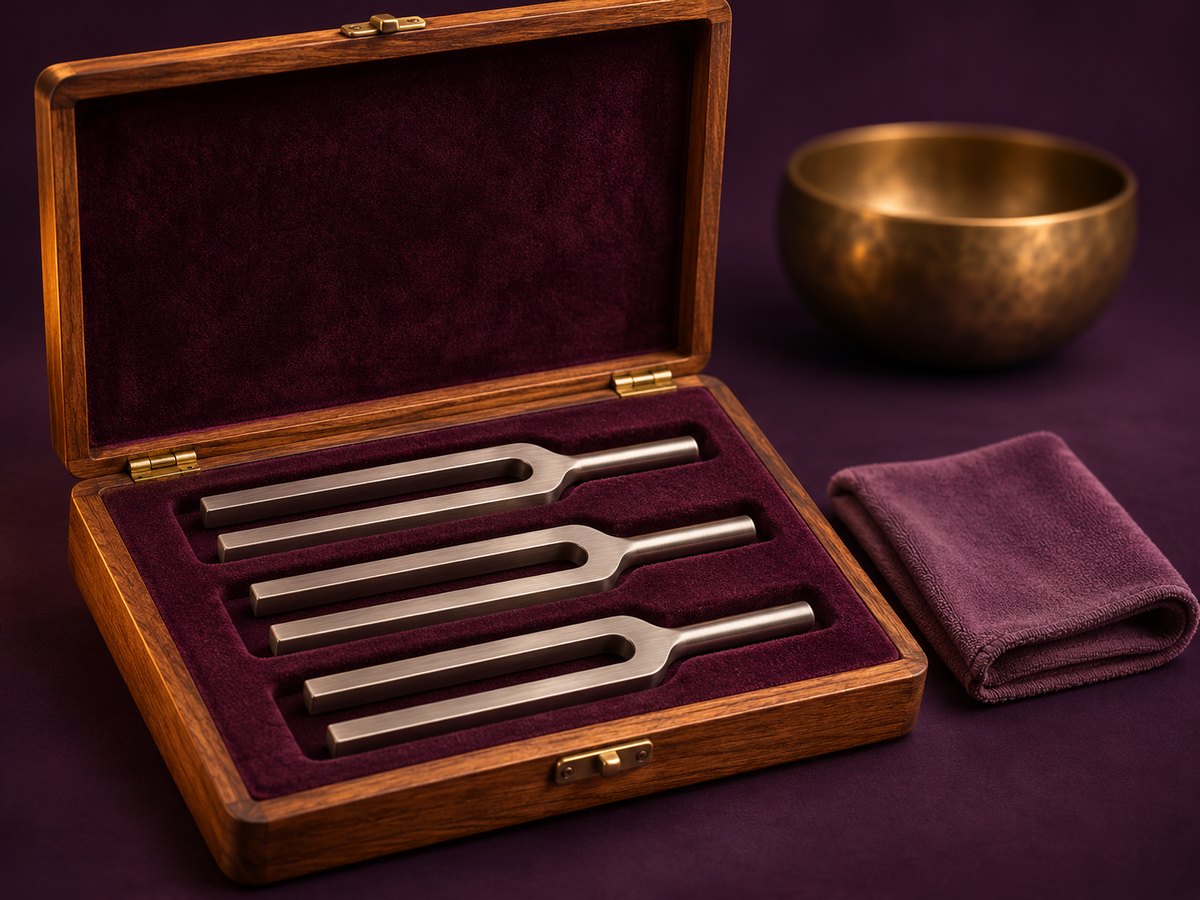
Tuning Forks Guide: 432 Hz, Chakra Sets & Weighted Forks
A tuning fork is a simple steel bar that sings one clear note. Here is everything a beginner needs: how forks work, weighted vs unweighted, the popular chakra, Solfeggio and 432 Hz sets, and how to strike and care for them.
Read the guide →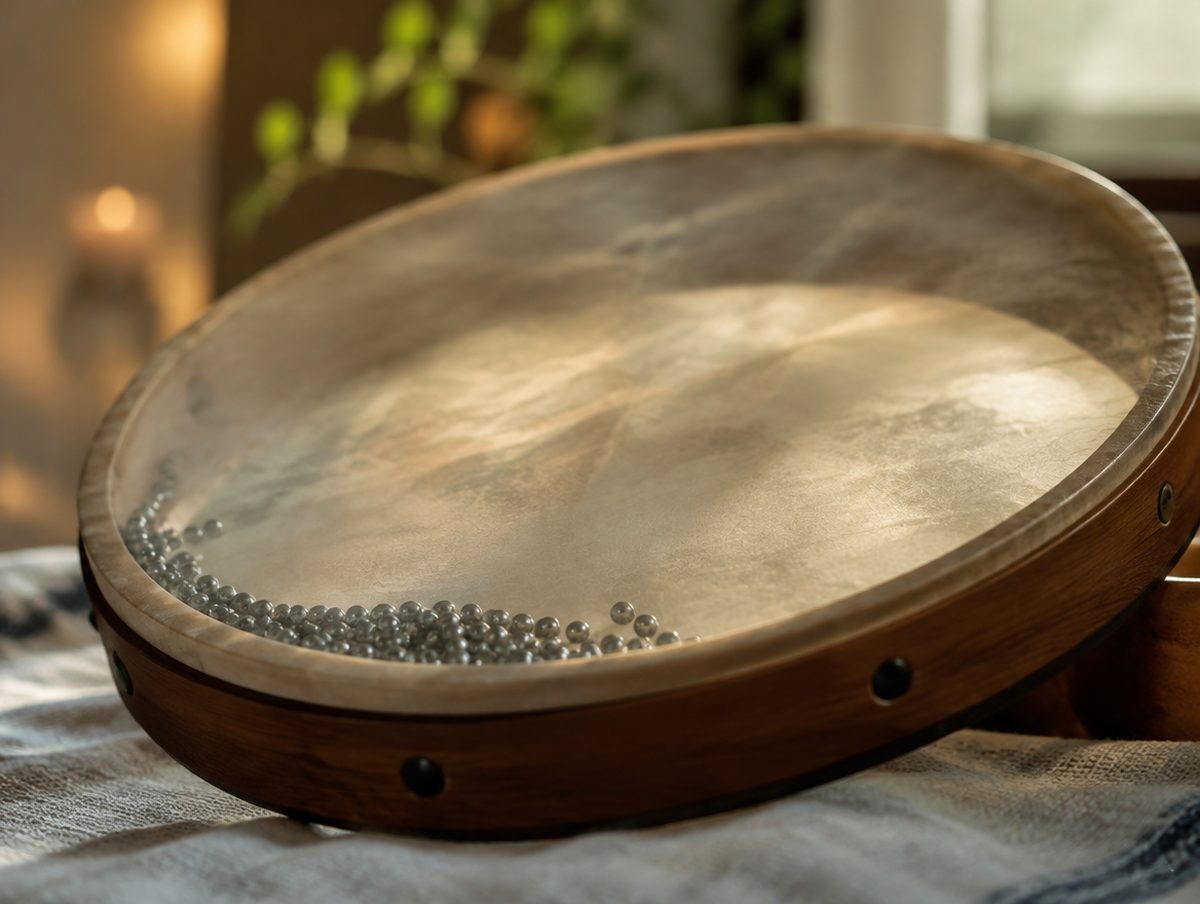
What Is a Sound Bath? What Happens, What to Bring and Etiquette
A sound bath is a relaxed, listening-focused session where you lie or sit comfortably while someone plays instruments like singing bowls and gongs. Here is what to expect, so you can walk in feeling prepared.
Read the guide →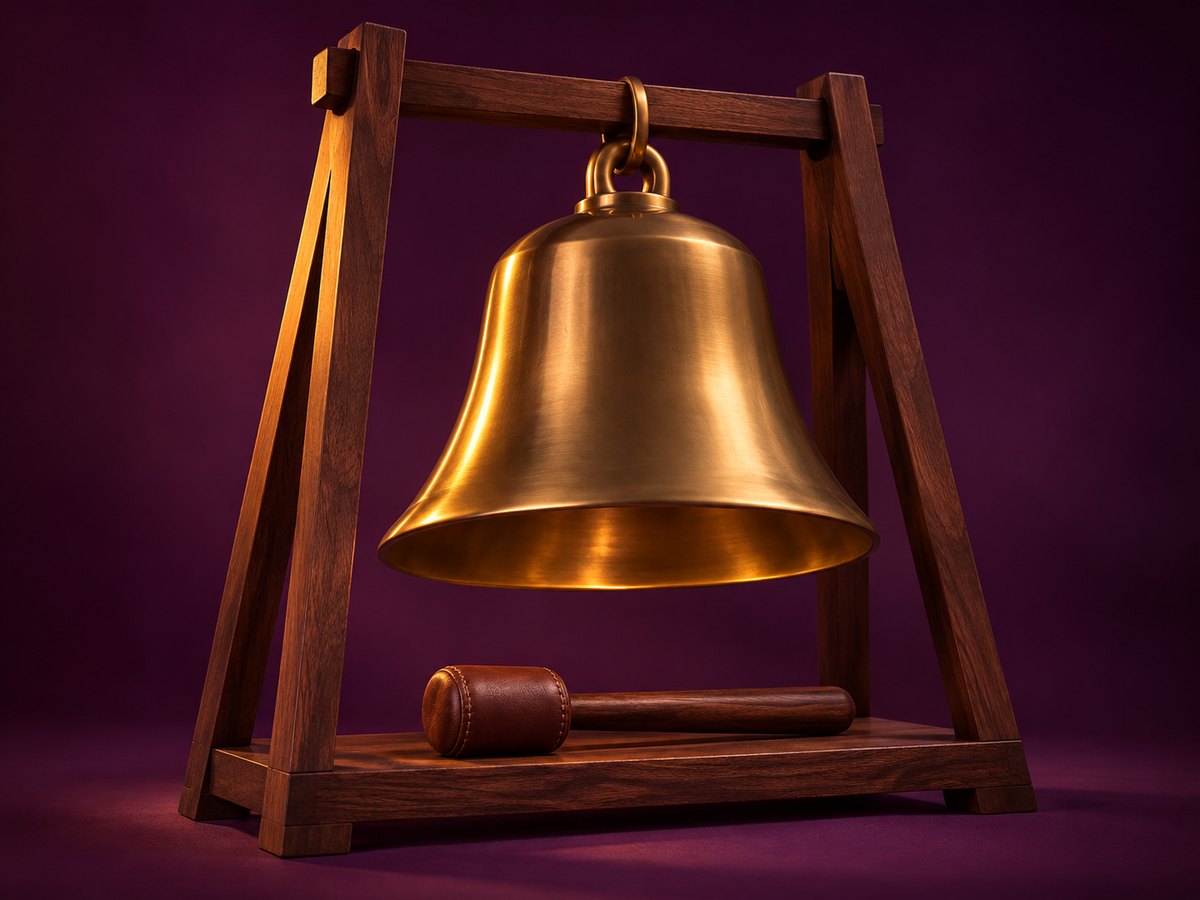
Sound Healing Instruments: Bowls, Forks, Gongs and Bells
Sound healing instruments range from bronze singing bowls and frosted crystal bowls to tuning forks, chimes, gongs and tuned bells. Here is what each one is made of, how it is played, and how to choose and use one safely at home.
Read the guide →Honest answers
Quick answers
What is sound healing?
An informal name for using sound, such as bowls, forks, chimes, gongs and voice, as a focus for rest and meditation. It is an experience, not a medical treatment.
What instruments are used in sound healing?
Singing bowls (metal and crystal), tuning forks, chimes and chime bars, bells, gongs, drums and the voice. Each has its own character; the fork player on this page lets you compare four of them.
Do I need headphones?
For Earth Hum, yes: a binaural beat only forms when each ear hears its own tone. For bowls, forks and chimes, speakers are fine.
Is 432 Hz special?
Most modern music tunes the note A to 440 Hz. Some people prefer A = 432 and describe it as warmer. That is a matter of taste and belief, not an established scientific finding.