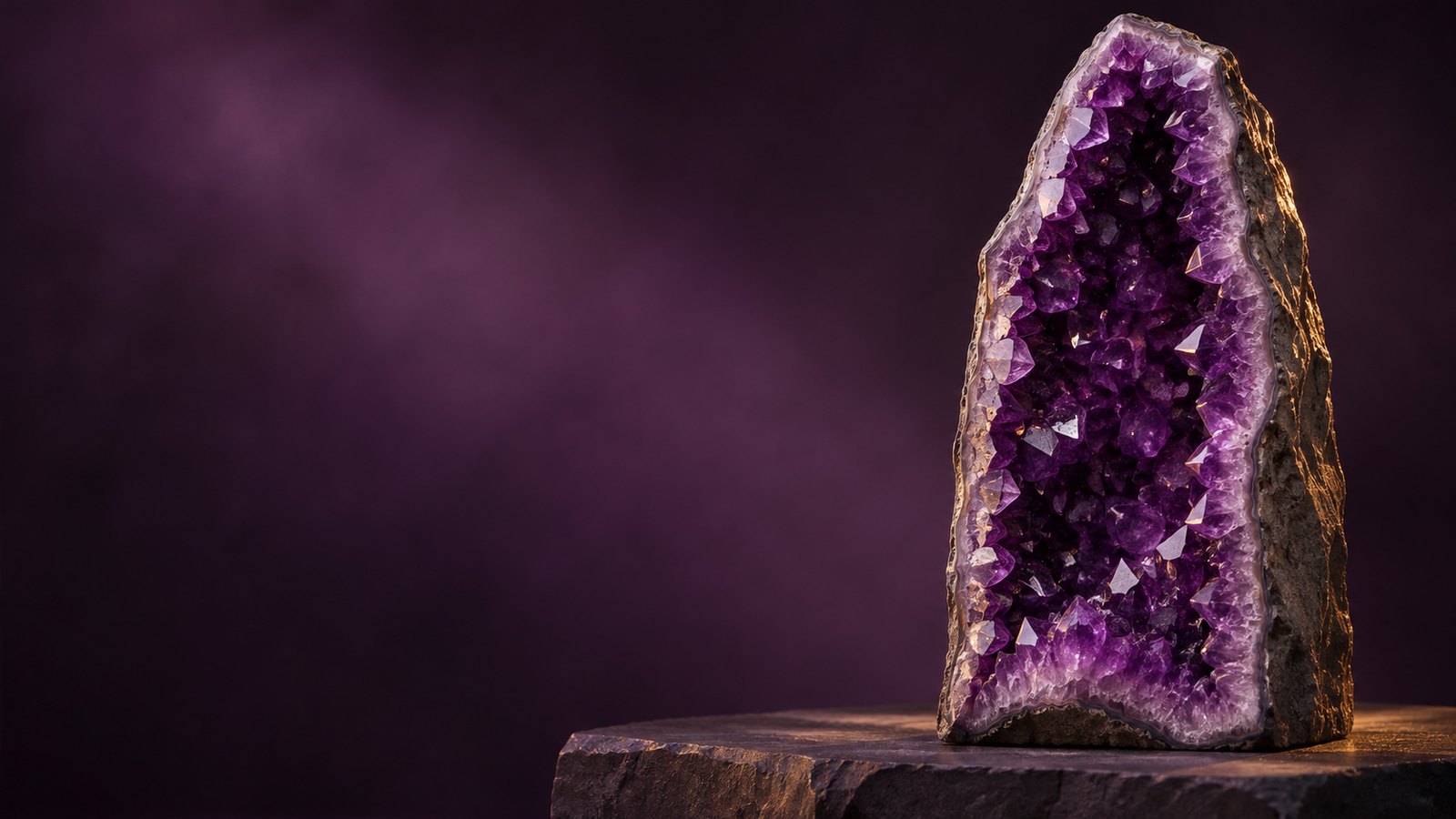
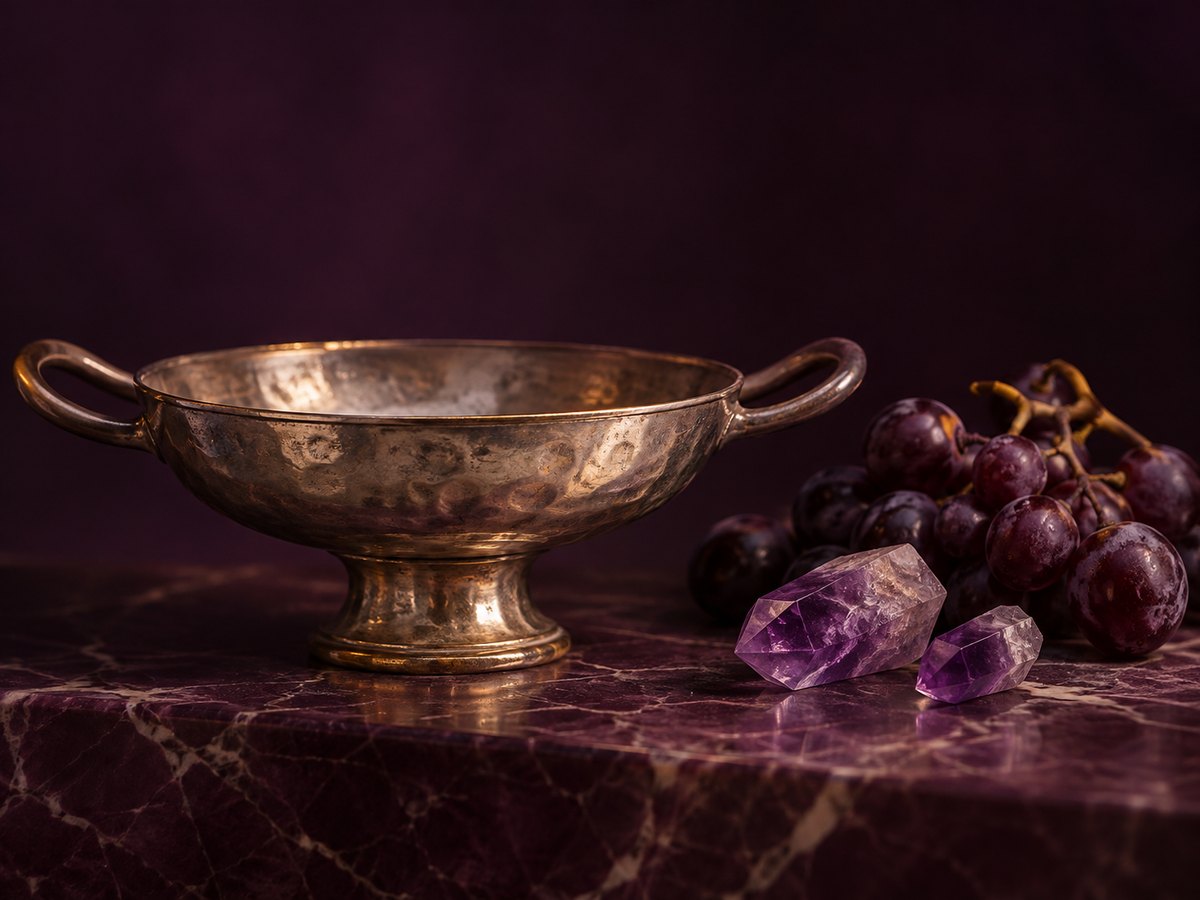
Amethyst is the stone most people picture when they think of crystals: a split geode glittering violet, or a single purple point on a windowsill. It has been worn by priests, kings and bishops for thousands of years, and it is still one of the easiest crystals to love and look after.
Here is what it really is, where it comes from, what tradition says it means, and how to keep its color.
What amethyst is: purple quartz
Amethyst is the purple variety of quartz. According to GIA, the Gemological Institute of America, it is silicon dioxide with a Mohs hardness of 7, the same as clear quartz and citrine. That makes it tough enough for everyday rings and pendants.
Its color has a surprisingly complex cause. Encyclopaedia Britannica notes that amethyst contains more iron oxide than any other variety of quartz and that experts believe its color comes from that iron. Geology In, a geology education site, explains the usual modern view: trace iron sits in the crystal, and long exposure to natural radiation in the ground turns it into "color centers" that absorb yellow and green light, leaving the violet we see.
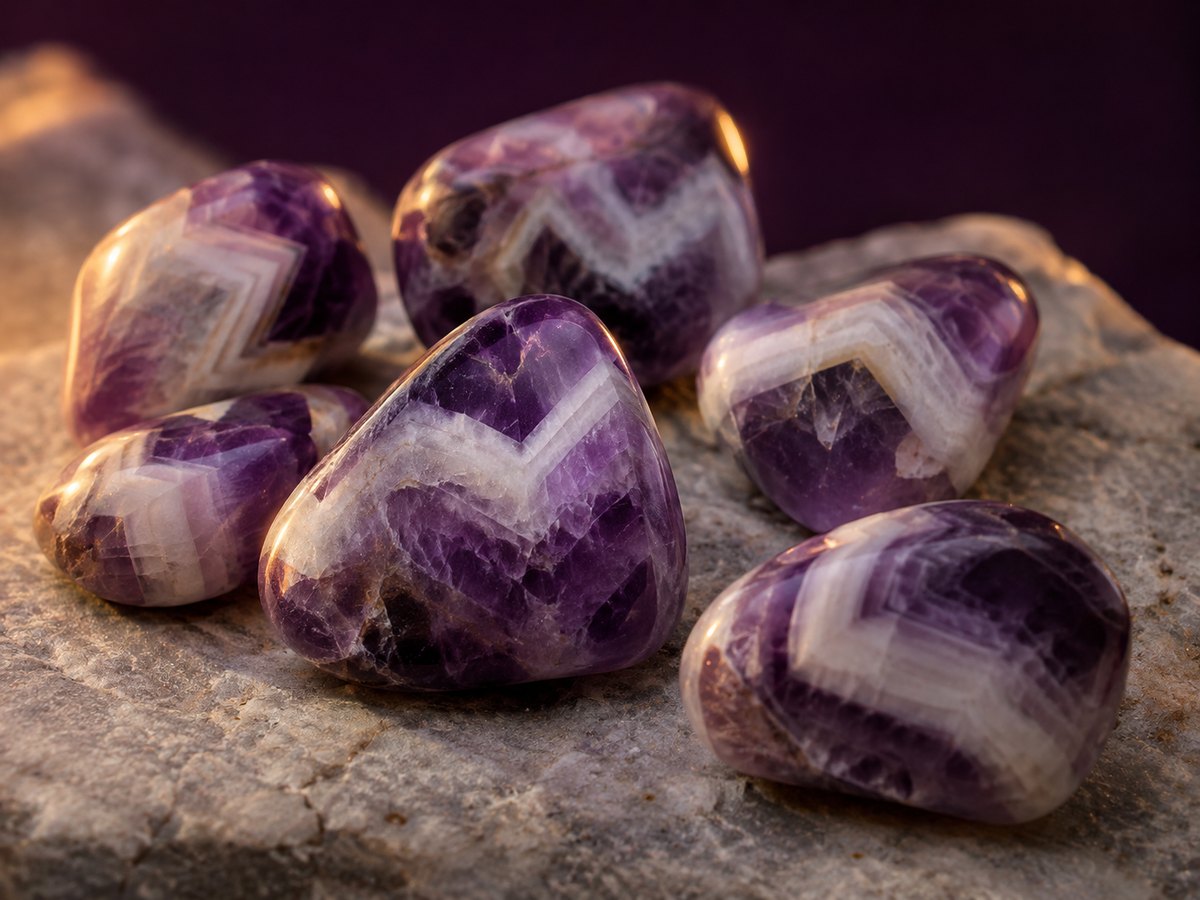
GIA describes the range as light lilac to deep royal purple, cool and bluish or reddish "raspberry." It also notes that amethyst commonly shows color zoning, angular bands of darker and lighter purple. That zoning matters later, when we talk about spotting fakes.
The amethyst and citrine connection
Heat changes everything. According to Britannica, heating removes the color from amethyst or turns it the yellow of citrine, and most commercial citrine is made that way. Geology.com adds that heating or irradiating some amethyst turns it green, a material sold as prasiolite. In Bolivia, GIA notes, nature makes both colors in one crystal, called ametrine.
Where amethyst comes from
Britannica lists notable occurrences in Brazil, Uruguay, Ontario and North Carolina. The famous giant geodes come from volcanic rock: FossilEra, a fossil and mineral dealer, explains that the basalt deposits of southern Brazil and Uruguay produce amethyst-filled geodes, sometimes enormous, and that tall elongated geodes from the region are sold as amethyst "cathedrals." The same source says the geodes formed in gas bubbles trapped in cooling lava, that the roughly 120-million-year-old basalt near Artigas, Uruguay routinely yields geodes over a meter wide, and that Uruguay tends to produce darker material while Brazil supplies more of it.
Africa is another key source. According to GIA, amethyst from Zambia can be a highly saturated raspberry color, and tends to have more inclusions than Brazilian material. GIA also records how big single crystals can get: its museum displayed a doubly terminated amethyst crystal weighing 164 pounds.
Amethyst meaning in history and crystal lore
Amethyst carries one of the oldest recorded meanings of any stone. According to Britannica, the name comes from the Greek amethystos, "not intoxicated," expressing the ancient folk belief that the stone kept its owner sober. The Wikipedia entry on amethyst traces the earliest reference to amethyst as a symbol of sobriety to a poem by Asclepiades of Samos, born around 320 BCE, and notes that wine cups were often carved from it.
Not everyone in the ancient world believed it. Wikipedia quotes the Roman writer Pliny dismissing the idea as "the falsehoods of the magicians." And the popular tale of Bacchus and a maiden named Amethyste? According to the same entry, that myth was invented by the French poet Remy Belleau in the 1500s.
The stone's prestige is genuinely ancient, though. GIA's history page says early Greek legends tied amethyst to Dionysus, god of wine, because of its wine-like color, and that other legends held it kept its wearer clear-headed and quick-witted in battle and business. GIA also records that:
- Amethyst was once considered equal in value to ruby, emerald and sapphire.
- It appears in religious jewelry, bishops' rings and the coronation regalia of British royalty.
- Saint Valentine is said to have worn an amethyst ring carved with Cupid.
- The Renaissance astrologer Camillo Leonardi recorded the belief that it quickened the intelligence and banished evil thoughts.
Britannica adds that amethyst is named in the Bible as one of the twelve stones on the high priest's breastplate (Exodus 28:19).
What amethyst means to people today
In modern crystal practice, the amethyst meaning centers on calm, clarity and spiritual connection. Fire Mountain Gems, a bead supplier that publishes gemstone lore, notes that many people use amethyst during meditation, and that practitioners associate it with the crown chakra at the top of the head, which they link with spiritual connection and inner wisdom. The same source says it has long been linked with intuition and spiritual awareness. Remember that these are beliefs and personal meanings, not mineral properties.
How people use amethyst
- In meditation. Holding a tumble, or sitting near a cluster, gives the eyes and hands a quiet focus. Amethyst also turns up in larger meditation pieces; iPyramids, for example, sets it in some of the crystal line-ups on its coils and pyramid frames, which you can browse on our iPyramids collection page.
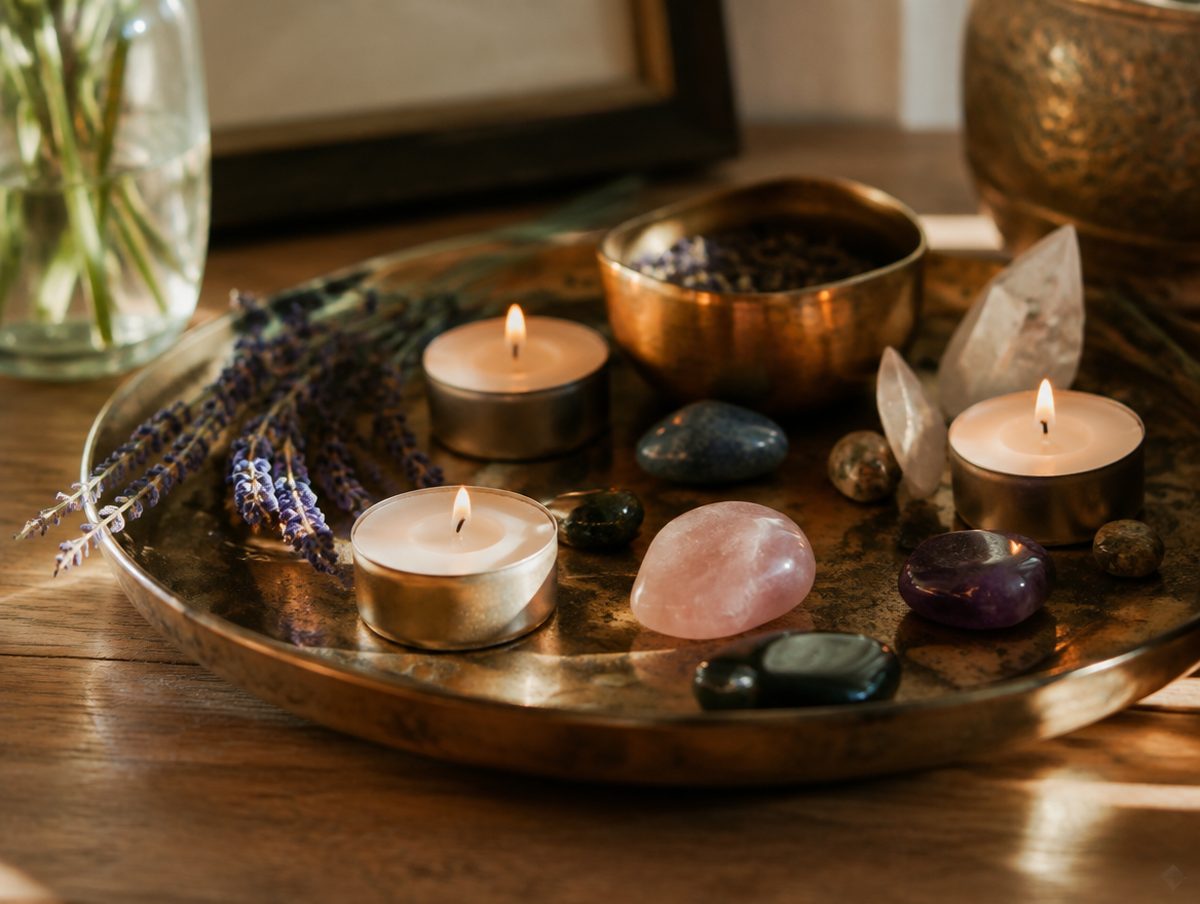
- On an altar or shelf. A cathedral or geode makes a natural centerpiece for a reflection corner.
- As a birthstone gift. GIA lists amethyst as the birthstone for February and the gem for the 6th and 17th wedding anniversaries.
- In pairings. People often combine it with clear quartz, rose quartz or selenite for a soft, pale palette.
Real, synthetic, dyed or glass: how to spot a fake
Most amethyst is natural, but there are look-alikes to know about:
- Synthetic amethyst. Lab-grown amethyst has the same chemistry as the natural stone. Geology.com explains that strong color zoning is very common in natural amethyst but not usually seen in synthetic material. Even so, makers learned to copy natural internal twinning, so for an expensive gem, a lab report is the only sure answer.
- Dyed quartz. According to GIA, light-colored amethyst and even pale quartz have been dyed purple.
- Glass and glass-ceramics. Geology.com shows imitation amethyst made from a Russian glass-ceramic called Nanosital. A perfectly uniform, flawless "amethyst" at a bargain price deserves a second look.
- Heat-lightened stones. GIA notes that heating can lighten very dark amethyst. That is a common, stable trade practice, but it should be disclosed.
Cleansing and caring for amethyst
In crystal tradition, people "cleanse" amethyst with moonlight, sound, smoke or a rest on selenite. One traditional method to skip is a long sunbath. According to Wikipedia, amethyst can fade if overexposed to light, and Geology In explains that ultraviolet light slowly breaks down the color centers. Keep display pieces out of strong direct sun.
- Washing. Rinse in lukewarm water with a drop of mild soap and pat dry. Avoid harsh cleaners.
- Heat. Keep it away from heaters and hot cars. Geology In notes that heating to roughly 300 to 500 degrees Celsius destroys the purple, which is exactly how citrine is made.
- Storage. At a hardness of 7, amethyst can scratch softer stones, so give jewelry its own pouch.
- Clusters. Dust them with a soft, dry brush rather than wiping the tips.
Who should be careful
Amethyst is one of the safest stones to own, but a few practical notes apply. Large cathedrals and geodes are heavy and can be top-heavy, so set them on a stable base where children and pets cannot pull them over. Cluster points can be sharp, and small tumbles are a choking risk for toddlers. If you want stones near drinking water, read our guide to water-safe crystals first. And a crystal is a focus for intention, never a replacement for a doctor or therapist.
Purple, old and easy to love, amethyst rewards a little knowledge: keep it out of the sun, ask how it was treated, and enjoy the long story it carries.
Quick answers
What does amethyst mean spiritually?
In crystal lore, amethyst is linked with calm, clarity and spiritual connection, and practitioners associate it with the crown chakra. Historically, its Greek name meant "not intoxicated," from the old belief that it kept the wearer sober and clear-headed. These are traditional beliefs, not mineral properties.
Does amethyst fade in the sun?
It can. Amethyst's purple comes from iron-related color centers that strong light and heat can break down over time. Keep display pieces out of strong direct sunlight and away from heaters.
How can I tell if amethyst is real?
Natural amethyst usually shows uneven color zoning, angular bands of lighter and darker purple. Be wary of perfectly uniform, flawless stones at low prices, which may be synthetic or glass. For expensive gems, ask for a lab report.
Can amethyst go in water?
Amethyst is quartz with a Mohs hardness of 7, so a quick rinse in lukewarm water with mild soap is fine. Dry it well, skip harsh cleaners, and do not leave it soaking in a sunny window.