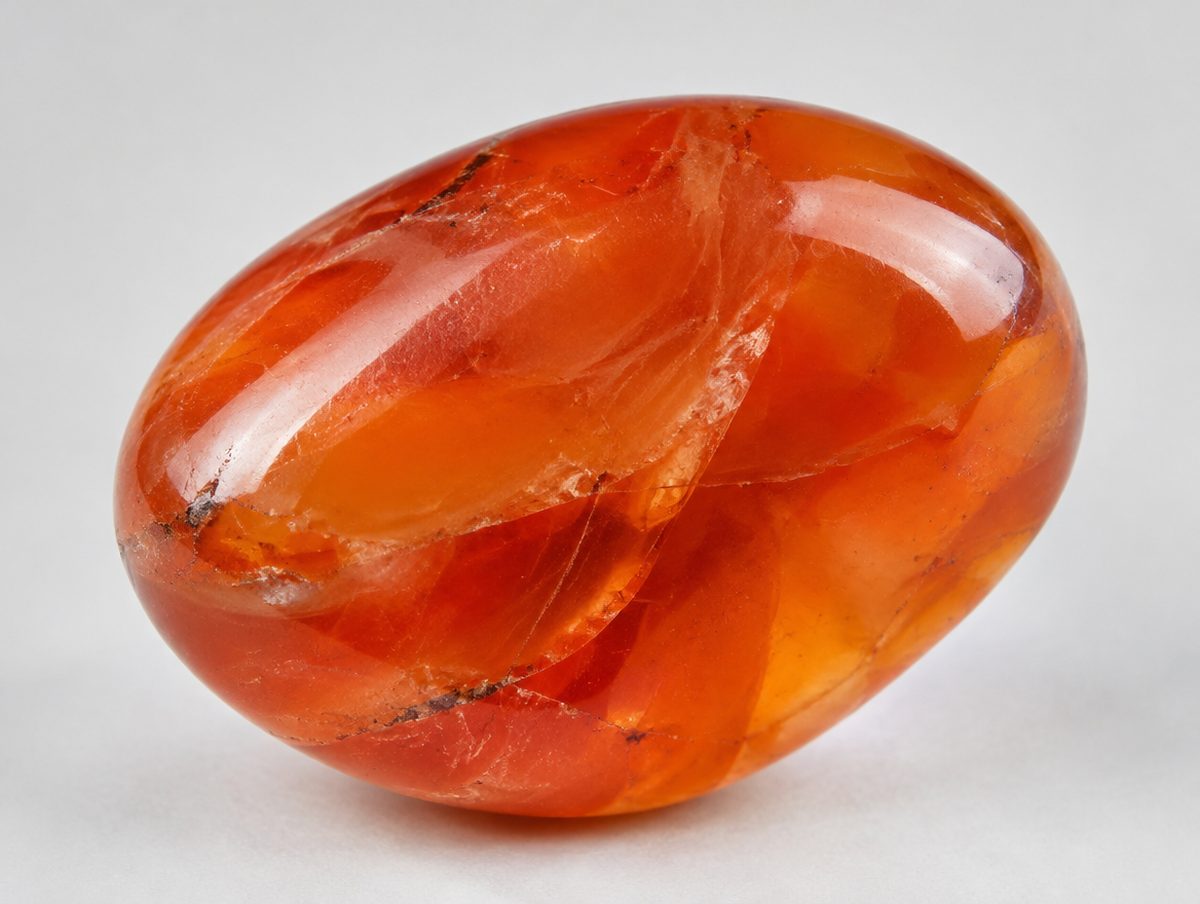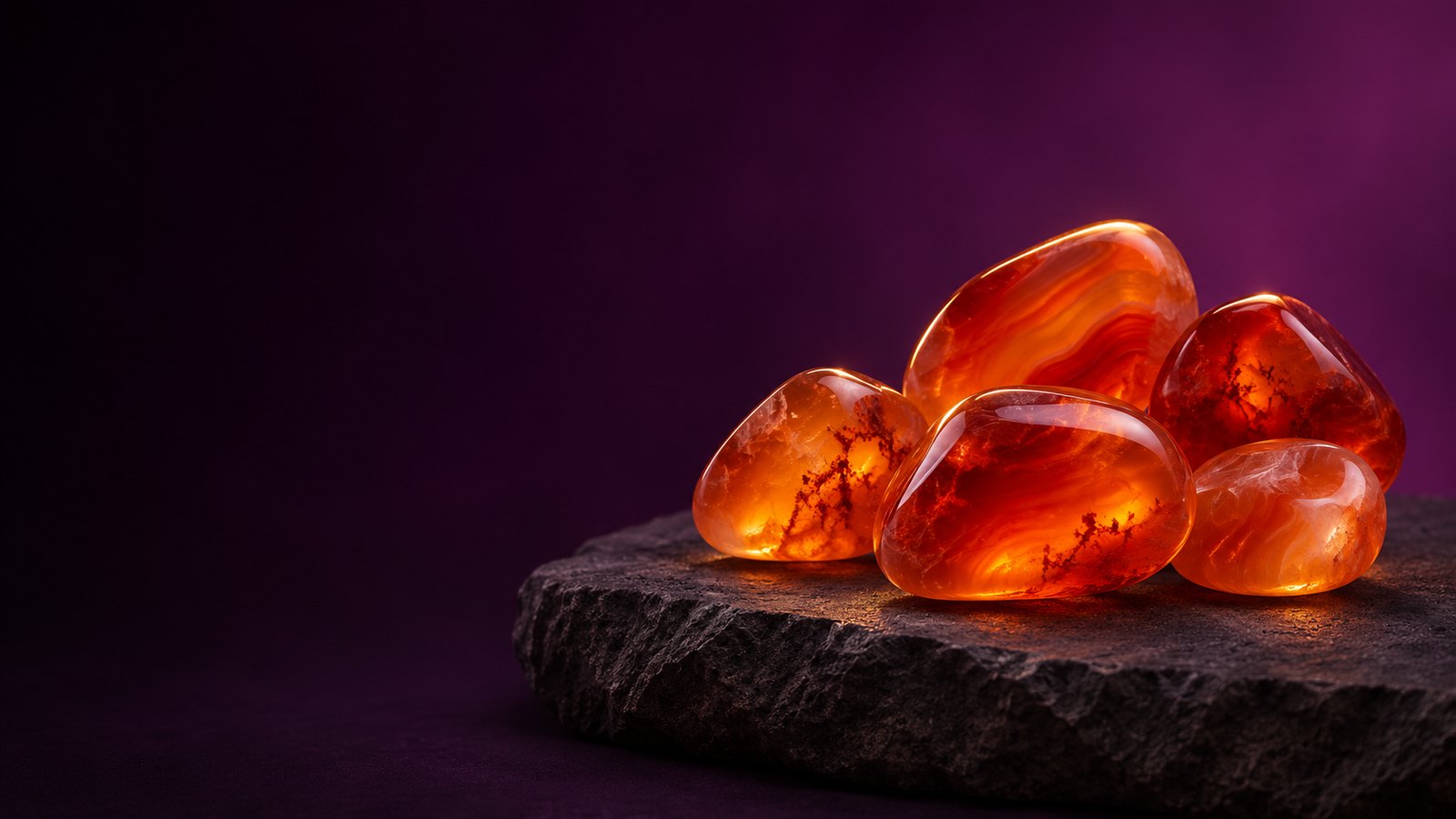
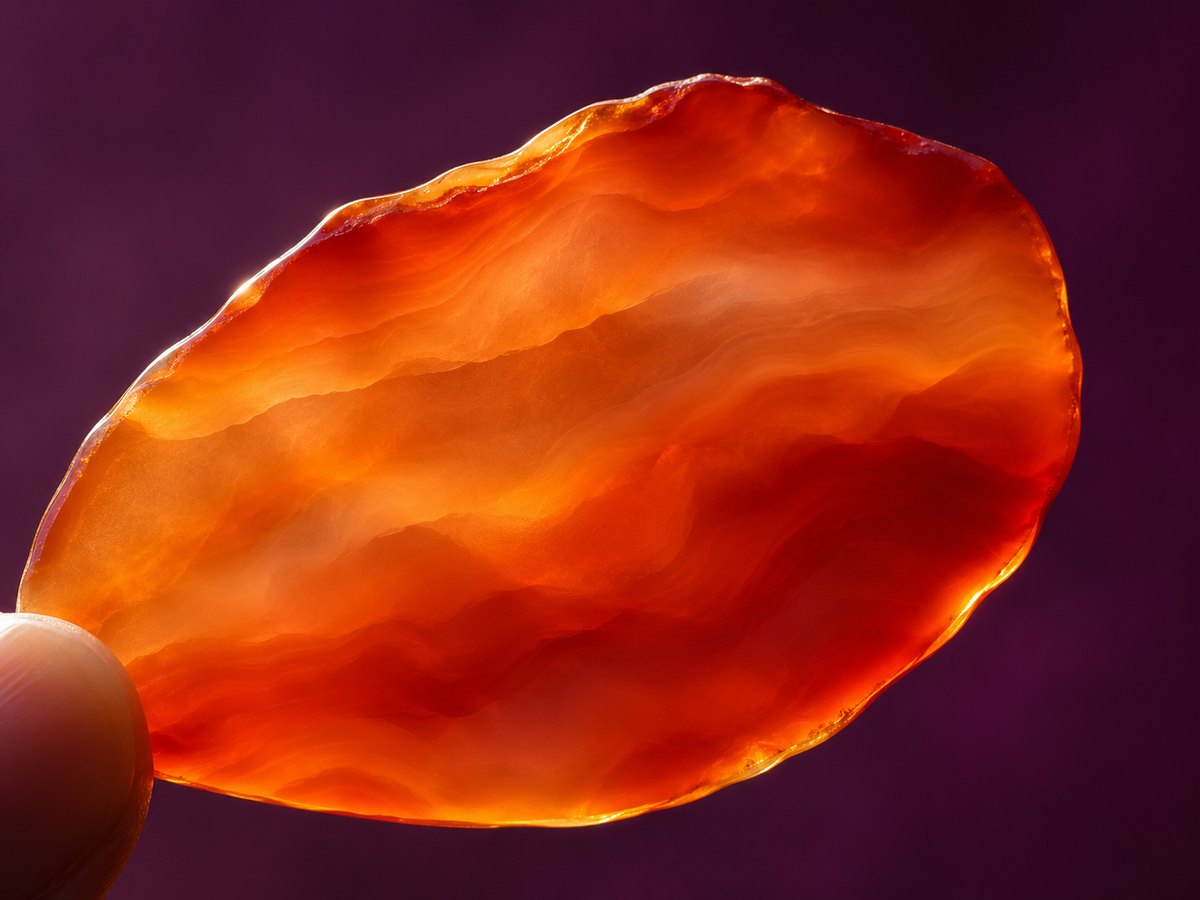
Carnelian is the color of embers: a warm, glowing orange to red that seems lit from inside when you hold it up to a window. People have cut it, carved it and carried it for thousands of years, and it remains one of the most loved and affordable crystals in any shop. It also comes with a buyer's puzzle, because a lot of what is sold as carnelian has been heated or dyed.
Here is what carnelian really is, what it means in tradition, how people use it, and how to care for it and shop for it honestly.
What carnelian is
Carnelian is a variety of chalcedony. A 1985 article in GIA's journal Gems & Gemology describes chalcedony as a microcrystalline form of quartz: a tough, dense mass of quartz grains far too small to see, which is why it looks waxy and smooth rather than crystal-clear. The same article notes that chalcedonies such as carnelian, agate and onyx owe their color largely to tiny particles of iron oxides and hydroxides, and that these stones have been used in jewelry for thousands of years.
The International Gem Society calls carnelian the best-known and generally least expensive variety of chalcedony, ranging from yellow-orange to rich reddish orange to orangey brown, and from semi-opaque to highly translucent. Geology.com, in a guide by geologist and GIA graduate gemologist Hobart M. King, describes it as translucent orange to red to brown chalcedony that is often banded, with orange-red layers alternating with white agate.
It is tough, too. Geology.com rates carnelian at 7 on the Mohs scale and calls it a hard, tough stone that works well in most jewelry and tumbles to a high polish. According to the International Gem Society, most commercial carnelian comes from India, with gem-quality sources in Brazil, Egypt and Uruguay as well.

Carnelian meaning in crystal lore
Few stones have as long a written history. According to the International Gem Society, ancient peoples all over the world favored carnelian because it was easy to cut into jewelry and to carve into seals and talismans, and since ancient times many people have considered it a lucky stone.
The same source gathers some memorable stories:
- A royal "gem language." In the 18th-century English and French courts, the first letters of gems set in jewelry could spell out a message, and a carnelian placed just so could wish everyone "good luck."
- Seals and prayers. The Prophet Mohammed was said to have worn a carnelian seal set in silver, which may help explain the stone's appeal in the Arab and Muslim world, where gem cutters often engrave carnelians with short prayers for luck or to turn away envy.
- The evil eye. In Egypt, people wear carnelian to ward off the evil eye and invite peace.
- Napoleon's seal. During his Egyptian campaign, Napoleon Bonaparte acquired an inscribed octagonal carnelian seal that he and his nephew Napoleon III regarded almost superstitiously.
In modern crystal tradition, carnelian's fiery color links it with:
- Courage and action. Many people keep it as a symbol of stepping forward, a fitting stone for someone starting something new.
- Creativity. Artists and writers often keep a piece on the desk as a token of creative spark.
- Warmth and joy. Its sunset color makes it a symbol of warmth, celebration and zest for life.
- Luck and protection. An echo of its long history as a lucky stone and talisman.
In chakra tradition, carnelian is the classic stone for the orange sacral center, associated with creativity, and in astrology lore it is most often paired with Leo and Virgo. These are beliefs and symbols, not properties of the mineral, and they are a big part of the stone's charm.
How people use carnelian
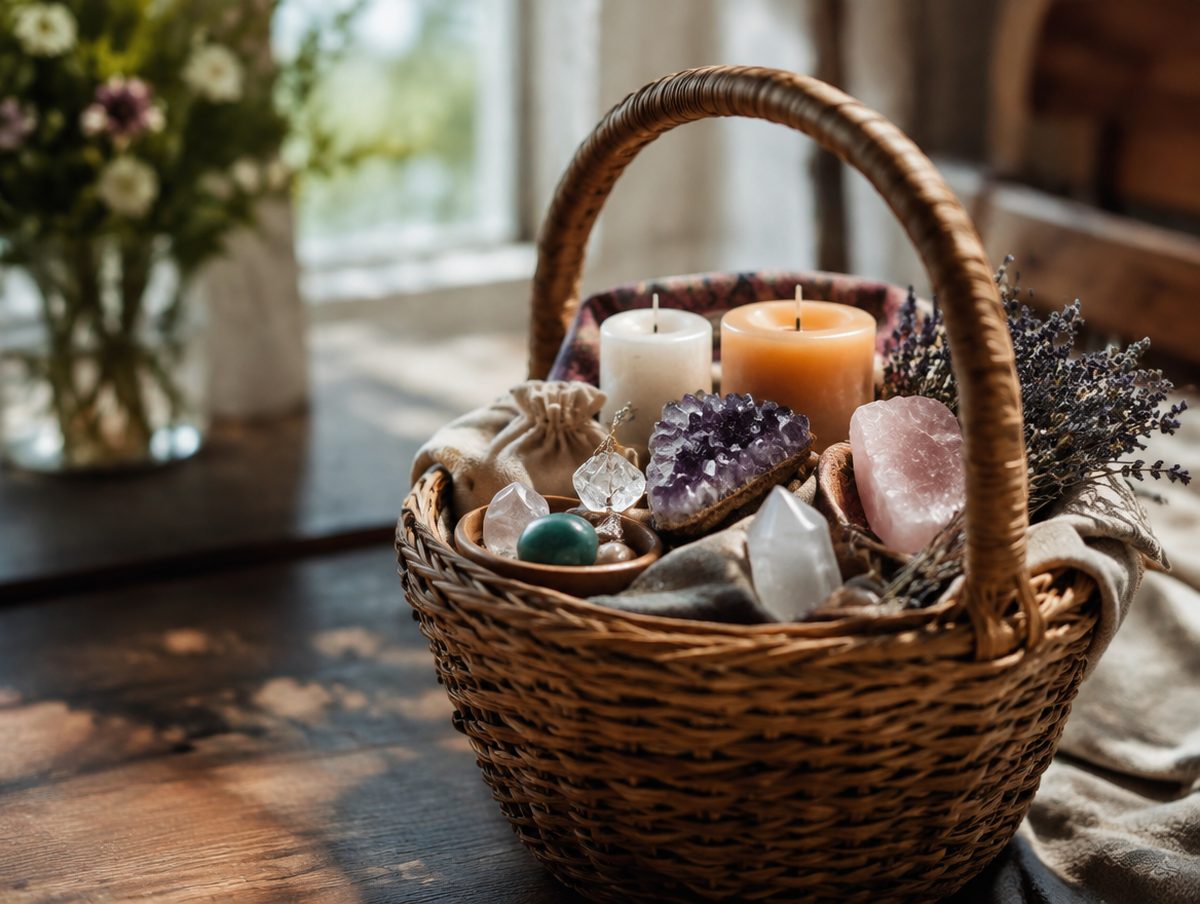
- As a pocket or palm stone. A tumbled piece is cheap, tough and comfortable to carry, which makes carnelian one of the most popular first crystals.
- As beads and carvings. Its hardness and even texture suit bead strands, rings and small carved pieces, continuing a tradition thousands of years old.
- On a creative workspace. Many people set carnelian beside a sketchbook, instrument or keyboard as a symbol of the work they want to make.
- In intention rituals. Some people hold it while naming one brave step they plan to take, then keep it somewhere they will see it daily.
For people who want to wear a symbol of intention, iPyramids makes crystal pendants and one-of-a-kind amulets; you can see them in the wearable pieces, and a few are shown under this article's introduction.
Heat-treated and dyed carnelian
This is the part most crystal guides skip. Geology.com states plainly that a large amount of the material sold as carnelian is actually a more common, less colorful agate that has been heat treated or stained, and that heating causes iron impurities in the agate to develop a bright orange to red color. The International Gem Society goes further: because iron is the source of carnelian's color, it can be heat treated easily, even by the sun's heat alone, and you should assume any piece has been enhanced this way unless told otherwise.
That is not necessarily a bad thing. Gemologist Kurt Nassau's overview of gemstone treatments, published by GIA, lists simple heating that turns yellow-to-brown chalcedony red, naming carnelian, and rates the result as stable. Heated carnelian is still real chalcedony.
Dye is a different matter. The same GIA overview lists dyeing as a widespread treatment for agate and chalcedony and notes that surface color coatings have been applied to carnelian. A 2009 GIA lab note on a crackled, treated chalcedony bead with carnelian body color adds that some dealers said even the carnelian color in that material came from dye. Dyed stones aren't fakes, but they should be sold as dyed.
How to tell what you have
- Hold it up to a bright light. According to the jewelry site Beyond Bohemian, even, cloudy color that fades softly from one area to the next points to carnelian, while color locked into sharp parallel bands points to agate, whether natural, heated or dyed.
- Look into cracks and pits. The same source notes that dye tends to pool where the stone is most porous, so color concentrated along fractures, bands and pits, rather than spread evenly through the body, suggests dye.
- Be wary of "candy" colors. Neon orange, hot pink or electric blue "carnelian" is dyed chalcedony.
- Ask the seller. Honest dealers will tell you whether a stone is natural, heated or dyed, and price it to match.
How to cleanse and care for carnelian
Carnelian is one of the easiest stones to care for. Wash it with lukewarm water and a little mild soap, rinse, and dry it with a soft cloth. Our guide to water-safe crystals lists undyed carnelian and other chalcedony among the stones that can take a brief rinse, with one caveat: dyed agate can bleed color, so keep dyed pieces dry and don't soak any stone for long.
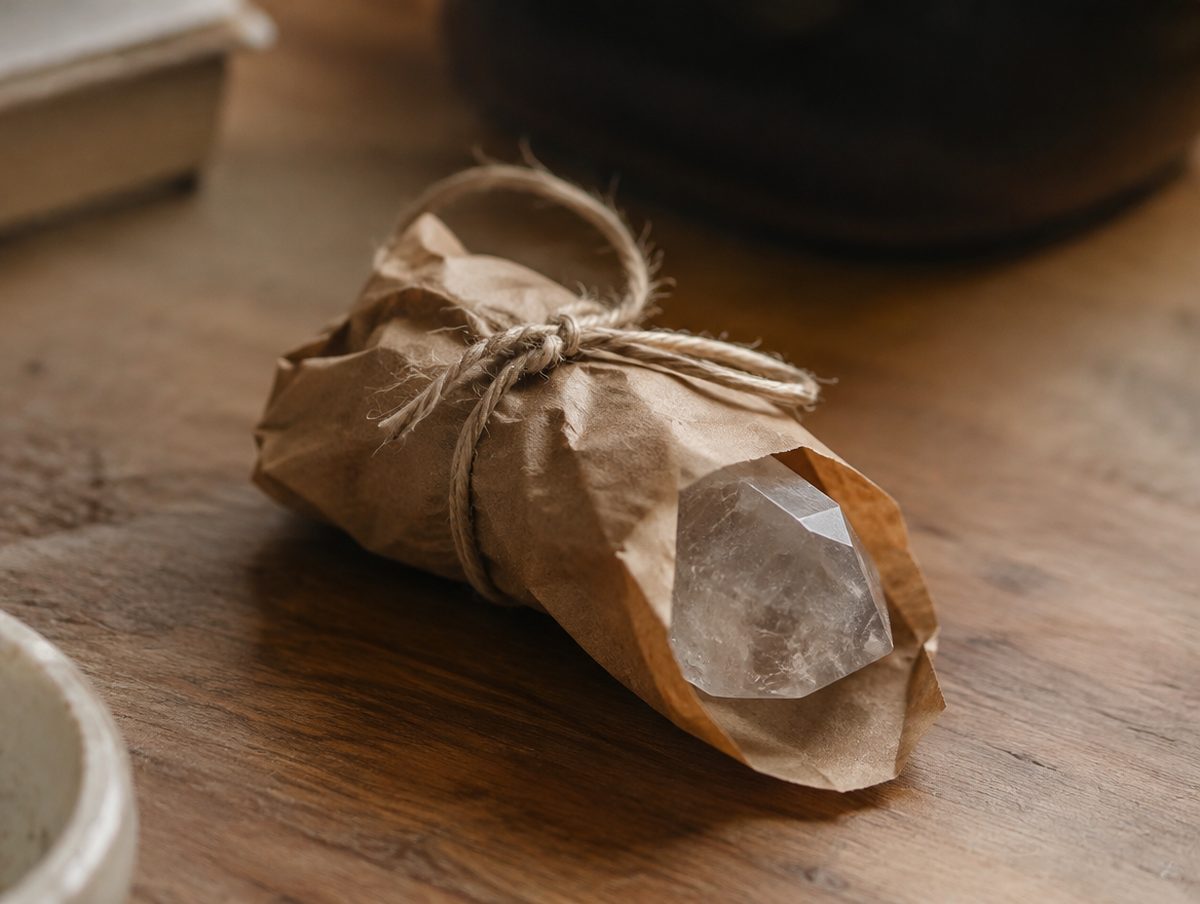
Store it in a pouch or lined box, apart from softer stones it might scratch. Many people also cleanse carnelian in the energetic sense with sunlight, smoke, sound or intention. A short time in the sun is a favorite ritual for this fiery stone. Beyond Bohemian notes that some surface dyes can fade over time, so keep dyed pieces out of strong sun.
Who should be careful
Carnelian is quartz-based and safe to handle and wear. Deposits Magazine, an earth science publication, names carnelian among the quartz-based stones whose fine dust is hazardous to breathe during cutting and grinding, so lapidaries work wet and wear a properly rated respirator. Keep small beads and tumbled stones away from young children and pets. And like every crystal, carnelian is a symbol and a beautiful object, not a substitute for professional help when you need it.
Quick answers
What does carnelian mean?
In crystal lore, carnelian is linked with courage, creativity, warmth, luck and protection. It has been carved into seals and lucky talismans since ancient times. These are traditional meanings and symbols, not properties of the mineral.
Is carnelian a type of agate?
Both are chalcedony, a microcrystalline form of quartz. Carnelian is the orange to red variety, usually with soft, even color, while agate is typically banded. Geology.com notes that much material sold as carnelian is agate that has been heated or stained.
Is most carnelian heat treated?
Very often, yes. The International Gem Society advises assuming any carnelian has been heated unless you are told otherwise, since its iron-based color deepens easily with heat. Heated carnelian is still real chalcedony and its color is stable.
How can I tell if carnelian is dyed?
Hold it to a bright light. Soft, cloudy, even color suggests carnelian; color pooled in cracks, pits or sharp bands, or a neon shade, suggests dye. When in doubt, ask the seller whether the stone is natural, heated or dyed.