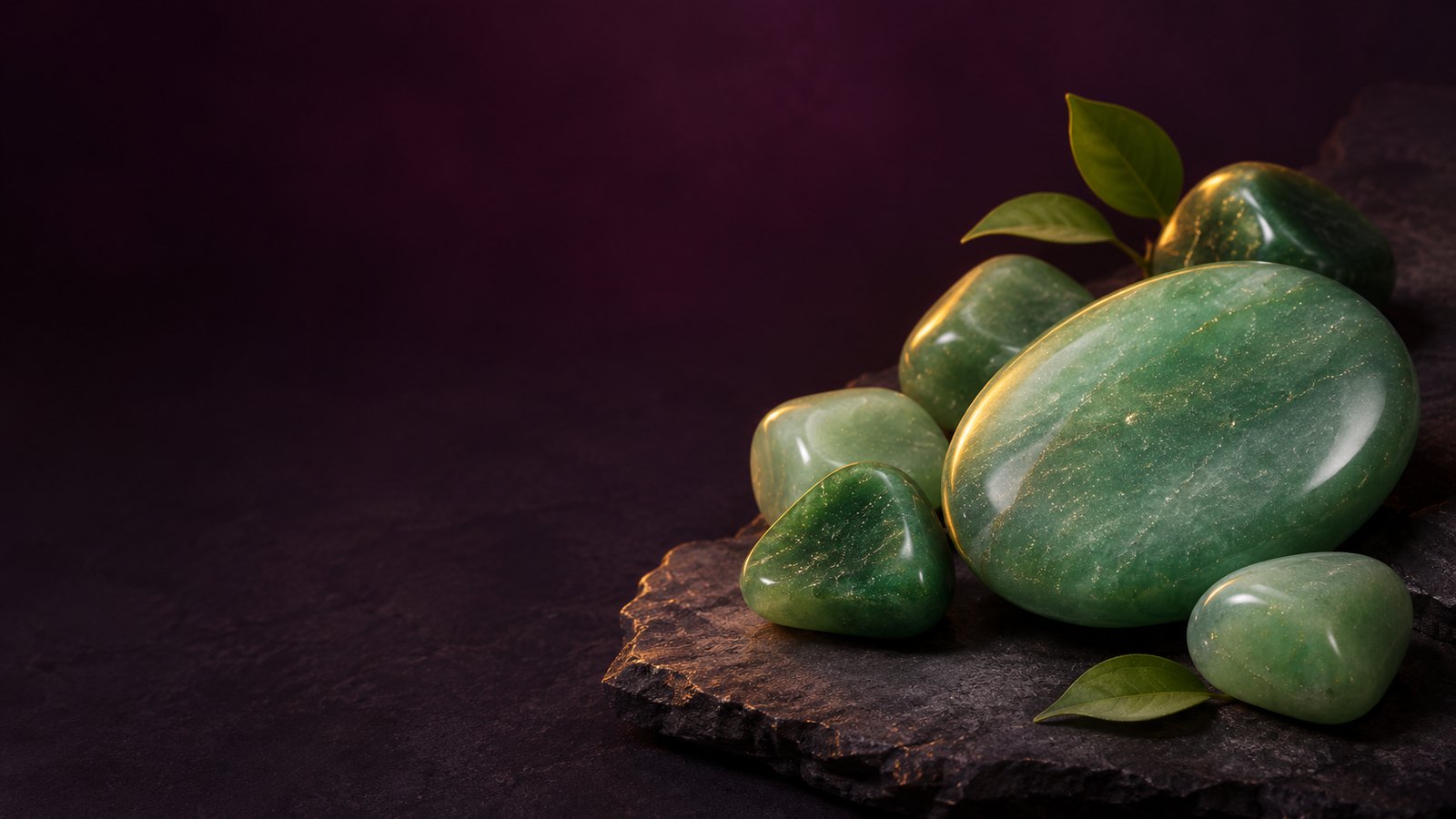
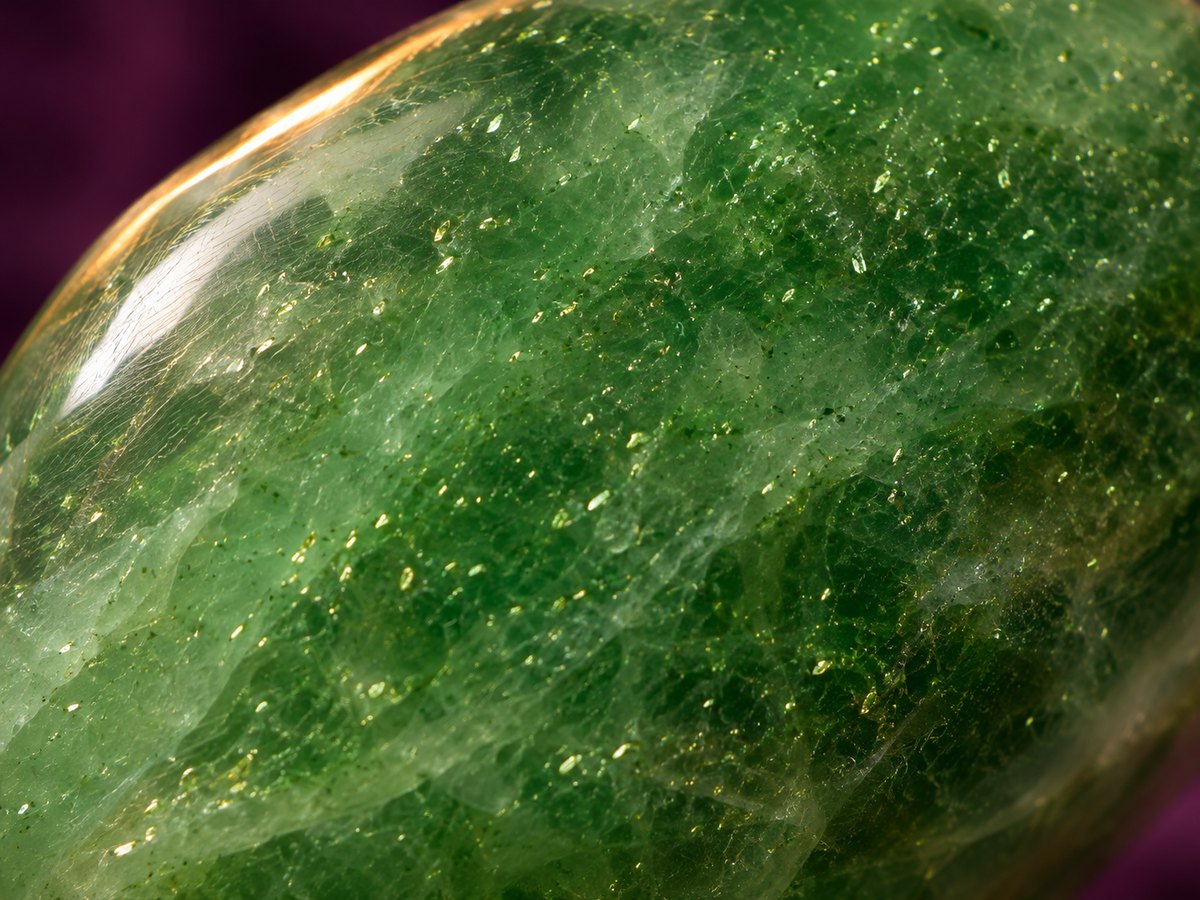
Green aventurine meaning starts with a sparkle. Hold a polished piece under a lamp and turn it slowly: tiny flecks inside catch the light and wink back at you, like sunlight on a pond. That glitter has a name, aventurescence, and a simple mineral cause. It has also earned green aventurine a cheerful place in crystal lore as a stone of luck and fresh starts.
Here is what green aventurine actually is, where the sparkle comes from, what people believe it means, how they use it, how to care for it, and how to tell real aventurine from glass goldstone and dyed look-alikes.
What green aventurine is
Green aventurine is quartz with company. According to Geology.com, in an article by geologist Hobart M. King, aventurine is a variety of translucent quartz or quartzite filled with small plate- or flake-shaped inclusions. Light bounces off those flat flakes, and the glittery result is called aventurescence.
The green comes from one mineral in particular. Geology.com explains that the most common inclusion in aventurine is fuchsite, a green, chromium-rich mica, and that just a few percent fuchsite by volume is enough to give the stone a distinct green color. Other inclusions make other colors: the same source notes that lepidolite mica can make pink to purple aventurine, hematite and goethite give orange, red and brown, and muscovite and ilmenite make gray or silvery pieces. Green is by far the color you will see most.
Because it is quartz, green aventurine is a fairly tough everyday stone. Geology.com lists its Mohs hardness at 6.5 to 7, a little lower when there is a lot of mica inside.
Where it comes from
According to Geology.com, India is by far the most important commercial producer of aventurine, with Brazil in second place, and smaller amounts come from Russia, Spain, Austria and Tanzania. Fire Mountain Gems, a long-running bead supplier that publishes gemstone lore, notes some of the stone's older trade names, including "Indian jade," and says it has long been carved into bowls, vases and statuettes as well as beads.
Aventurescence: the sparkle, explained
Aventurescence is not a coating and not a dye. It is reflection. Each fuchsite flake works like a tiny mirror sealed inside the quartz. When many flakes lie in roughly the same direction, they flash together as you tilt the stone, and the effect can be striking. When they are scattered or very fine, the stone simply looks softly frosted, with a gentle shimmer.
Geology.com notes that some people feel most material sold as aventurine has too little aventurescence to deserve the name, and that remarkable aventurescence is rare. So if you find a piece that really glitters as it turns, you have found something worth keeping.
Here is a fun twist: the word itself comes from glass. According to Geology.com, the name dates to the 1600s, when Italian glassmakers accidentally mixed tiny copper particles into a batch of molten glass. They called the sparkly result avventura, "by chance," and the name later passed to the natural stone that looked like it.
Green aventurine meaning in crystal lore
Every "meaning" below comes from tradition and modern crystal practice. These are beliefs people hold about the stone, not properties it has, and they are part of the fun of keeping one.
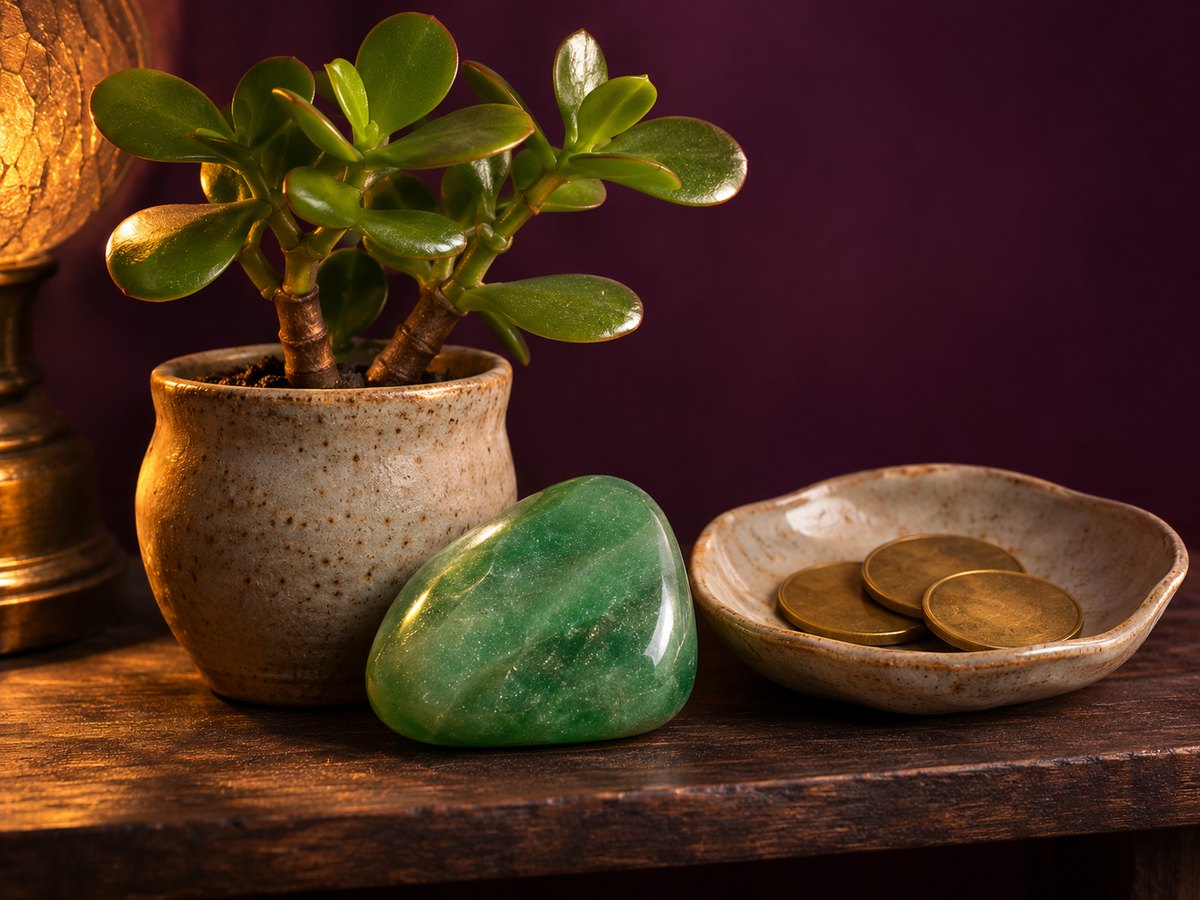
- The stone of opportunity. Fire Mountain Gems writes that green aventurine is known as the "Stone of Opportunity" because, in crystal and metaphysical traditions, people believe it draws luck, abundance and success, especially in new ventures.
- Growth and fresh starts. The same source ties its green to growth and renewal, "much like the energy of spring," which is why many people choose it when starting a job, a business or a new chapter.
- Optimism and open-mindedness. Fire Mountain Gems notes that the name makes people think of "adventure," and that aventurine is linked in lore with optimism, perseverance and seeing new possibilities. That is also why it has a long reputation as a lucky charm for games of chance.
- The heart chakra. In chakra traditions, practitioners pair green stones with the heart chakra at the center of the chest. Fire Mountain Gems lists aventurine among its heart chakra stones, alongside jade, malachite, peridot and amazonite.
How people use green aventurine
- A pocket stone. Many people carry a tumbled piece as a small, tactile reminder of a goal, an interview or a fresh start.
- On a desk or near a cash box. In crystal practice it is a common pick for a workspace, as a symbol of opportunity.
- In a heart-centered meditation. Some people hold it at the center of the chest while they breathe slowly and set an intention. Others place it on a home altar; our guide to building a meditation altar shows one simple layout.
If you like to wear your intentions, the crystal torus pendants on our iPyramids page come in several crystal line-ups, and green stones sit naturally with the heart-centered ones.
Real green aventurine vs goldstone and fakes
Green aventurine is affordable, but a few look-alikes turn up again and again.
Goldstone (aventurine glass)
Goldstone is man-made glass. According to Geology.com, it is produced by mixing fine metal particles into transparent glass, and the base glass can be clear, green, blue, purple or other colors. Green goldstone is often sold beside green aventurine, sometimes under confusing names.
- The sparkle is too perfect. Geology.com notes that goldstone has much stronger aventurescence than most natural aventurine. Goldstone glitters evenly everywhere, with bright, uniform, metallic points. Real aventurine usually shows softer, uneven flakes, with patches that are more or less sparkly.
- The flecks are coppery. In most goldstone the glitter reads as tiny copper or gold stars. In green aventurine it reads as green or silvery-green mica.
- It is glass. Look for small round bubbles under a magnifier and a very glassy, almost wet shine.
Goldstone is a lovely material in its own right. It simply is not aventurine, and an honest label will say "goldstone" or "glass."
Dyed quartz and dyed aventurine
Geology.com warns that aventurine with faint sparkle, and common quartz, are often dyed into bright colors and sold as aventurine. Be cautious, it says, especially with outrageous colors. Natural green aventurine runs from pale sage to deep forest green. A neon, perfectly even green, or color that sits darker in the cracks, deserves a second look.
Jade mix-ups
Aventurine is sometimes mistaken for jade, and vice versa. Fire Mountain Gems suggests looking for jade's more translucent, glowing quality and for aventurine's telltale sparkle. If you are paying jade prices, ask for a gem lab report.
How to cleanse and care for green aventurine
Green aventurine is one of the easier stones to look after.
- Water is fine, briefly. As a quartz, it handles a quick rinse in lukewarm water with a drop of mild soap. Pat it dry with a soft cloth. Skip long soaks for rough or heavily included pieces.
- Watch for pitting. Geology.com notes that coarse mica grains can pluck out during polishing and leave a pitted surface, and that pieces with a lot of fuchsite can split along the flakes. Give each piece its own pouch so it does not knock against harder stones.
- Energetic cleansing. In crystal practice, people "reset" a stone with moonlight, a sound bath, a singing bowl or a few minutes of smoke from incense. These are rituals, not cleaning. Our guide to cleansing and caring for crystals walks through each one.
Who should be careful
Tumbled stones and beads are a choking hazard for babies, young children and pets, so keep them out of reach. If you want to use any stone around drinking water, read our guide to water-safe crystals first and use the indirect method, with the stone outside the water. And keep green aventurine in its proper role: a symbol and a pleasure to hold. It is never a substitute for a doctor, a counselor or a financial adviser when you need one.
Curious about other green stones? Our guide to green crystals compares malachite, jade, emerald, peridot and more, side by side.
Quick answers
What is green aventurine good for in crystal lore?
In crystal tradition, green aventurine is called the stone of opportunity. People associate it with luck, fresh starts, optimism and the heart chakra, and many carry it for a new job, a new venture or a new home. These are beliefs, not properties of the stone.
How can I tell if green aventurine is real?
Real aventurine shows soft, uneven green or silvery flakes of fuchsite mica. Goldstone glass glitters evenly with bright copper-colored points and may show round bubbles. Be wary of neon colors or color pooling in cracks, which suggest dyed quartz.
Can green aventurine go in water?
Yes, briefly. It is a variety of quartz, so a quick rinse in lukewarm water with a little mild soap is fine. Dry it right away and skip long soaks for rough or pitted pieces. Never put any stone directly in drinking water without checking a water-safe list first.
Is goldstone the same as aventurine?
No. Goldstone is man-made glass with fine metal particles mixed in. The word aventurine actually comes from that Italian glass, but natural aventurine is quartz or quartzite with mica inclusions. Both are pretty; they are simply different materials.