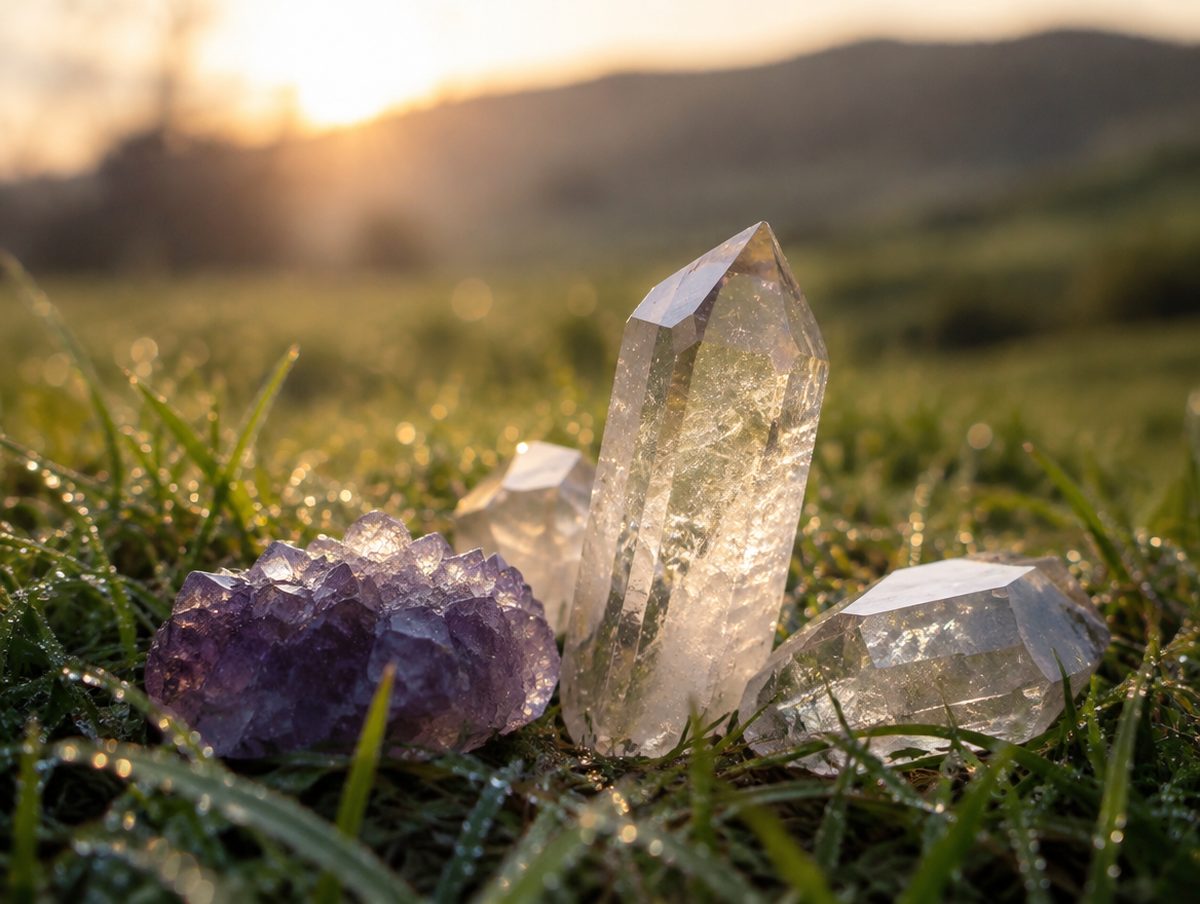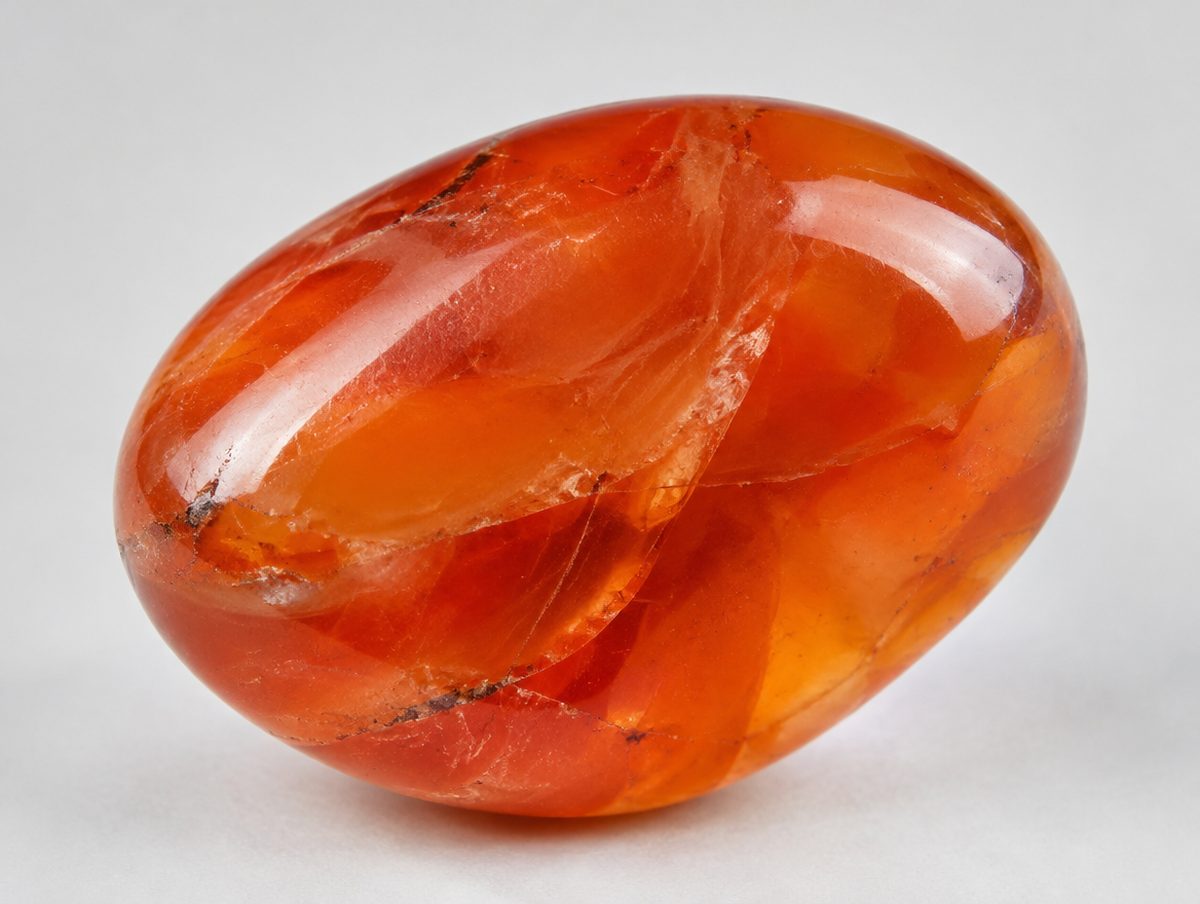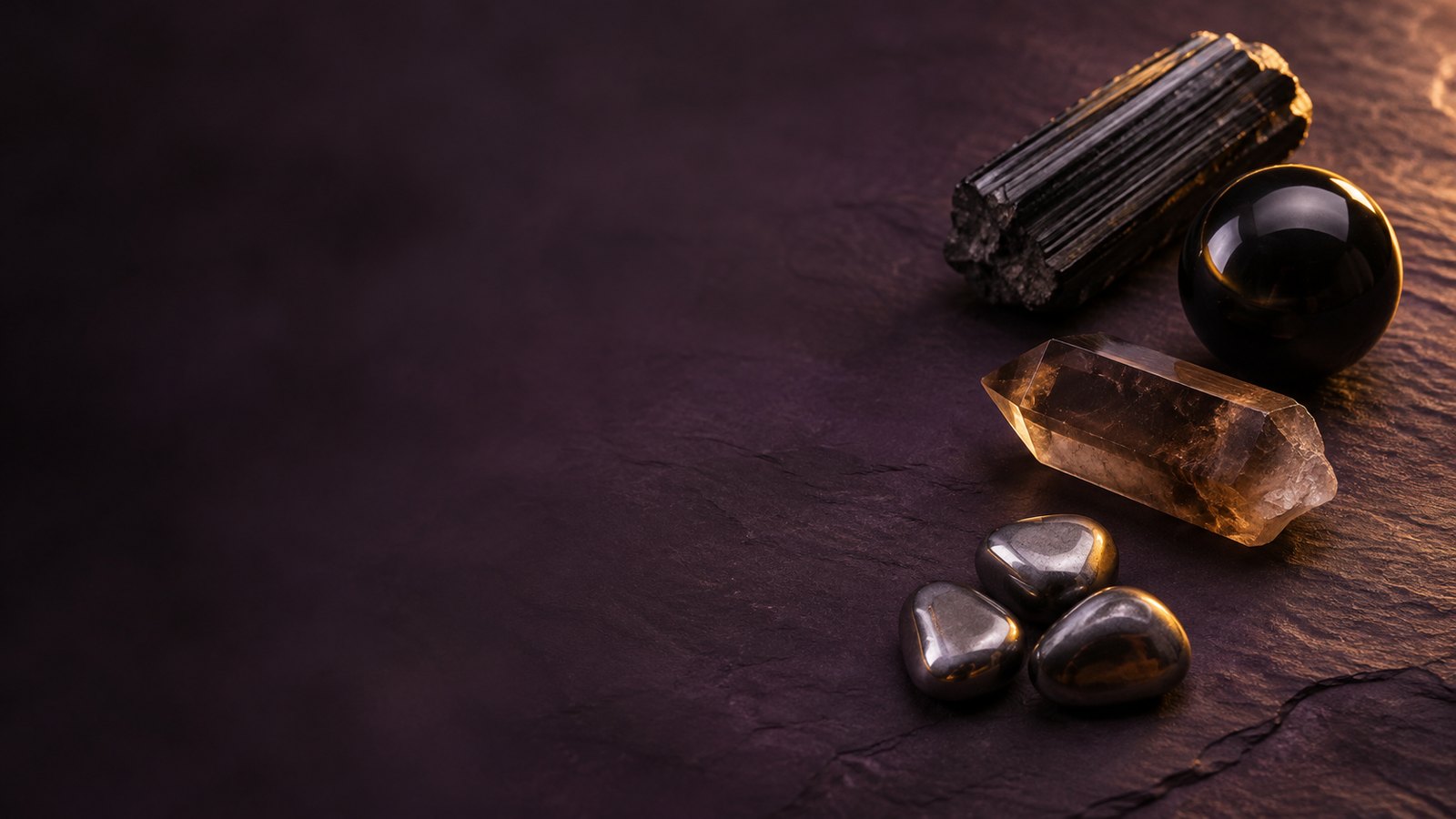
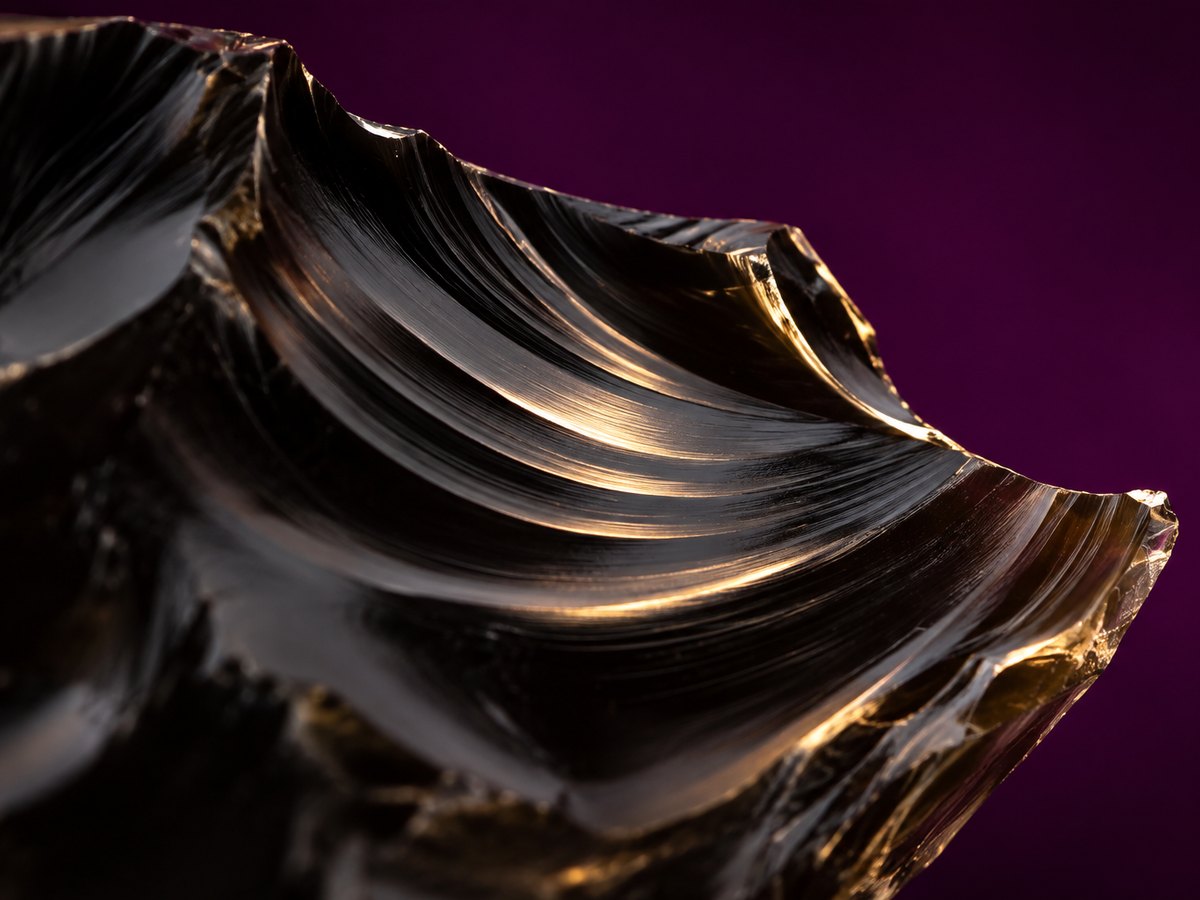
Ask crystal lovers which stones they keep for protection and you will hear the same handful of names: black tourmaline, obsidian, smoky quartz, hematite and, for the history buffs, jet. Most of them are dark, heavy or glassy, and most have a long story behind them. This guide walks through each one: what it actually is as a mineral, what people believe about it, how to tell a real piece from a look-alike, and how to keep it safe at home.
One note before we start. Protection in crystal practice is about intention, symbolism and ritual. A stone can be a meaningful reminder to set boundaries or to feel at home in your space. It is not a lock, an alarm or a substitute for real help when you need it.
What "protection" means in crystal tradition
The idea that a small object can stand guard is very old. Amulets turn up in almost every culture, and stones were among the most popular materials. A lovely example comes from Roman Britain. According to the Malton Museum in North Yorkshire, jet amulets carved as Medusa heads have been found in graves in Roman York, and such pieces were believed to attract and hold evil powers, drawing them away from the person wearing them.
Modern crystal practice keeps the same basic picture. Practitioners describe protection stones as a shield, a filter or an anchor. Dark stones are usually linked with the root chakra at the base of the spine and with feeling grounded. People choose them for front doors, cars, desks and pockets, and many like to hold one while setting an intention for the day.
Crystals for protection: the stones people reach for
Black tourmaline
What it is: Nearly all black tourmaline is schorl, the iron-rich member of the tourmaline group. According to the Handbook of Mineralogy, schorl has a hardness of 7 and grows as long prisms with fine grooves running down their length. The Wikipedia entry on tourmaline notes that schorl may make up 95% or more of all tourmaline in nature, which is why it is so affordable.
In tradition: It is the most widely used protection stone in modern crystal practice. People place a raw stick by the front door or at the corners of a room as a symbolic boundary. We cover it in depth in our black tourmaline guide.
Obsidian
What it is: Not a crystal at all, but natural glass. According to the U.S. Geological Survey, obsidian forms when very silica-rich rhyolite lava, typically more than 74% silica, erupts and cools so fast that crystals cannot form. The USGS also notes that it breaks into smooth, curved surfaces with edges sharper than the finest steel blades.
In tradition: Obsidian has a long history as a mirror stone. The British Museum holds a polished obsidian disc known as Dr Dee's Magical Mirror, once linked to John Dee, the 16th-century scholar at the court of Elizabeth I. The museum lists it as Aztec work made in Mexico, and a 2021 report in The Art Newspaper describes research matching its obsidian to sources near Pachuca. Today, many people use a black obsidian sphere or palm stone for reflection and for what practitioners call "cutting cords" with the past.
Smoky quartz
What it is: Quartz in shades from pale tea to almost black. According to the Museum of Radiation and Radioactivity run by Oak Ridge Associated Universities, the smoky color in nature comes from long exposure to gamma rays from naturally occurring elements such as potassium-40, uranium and thorium, and the quartz must contain a trace of aluminum to darken.
In tradition: Smoky quartz is the gentle, earthy choice. Practitioners link it with grounding and with letting go, and many people prefer it to black stones because it is translucent and catches the light.
Hematite
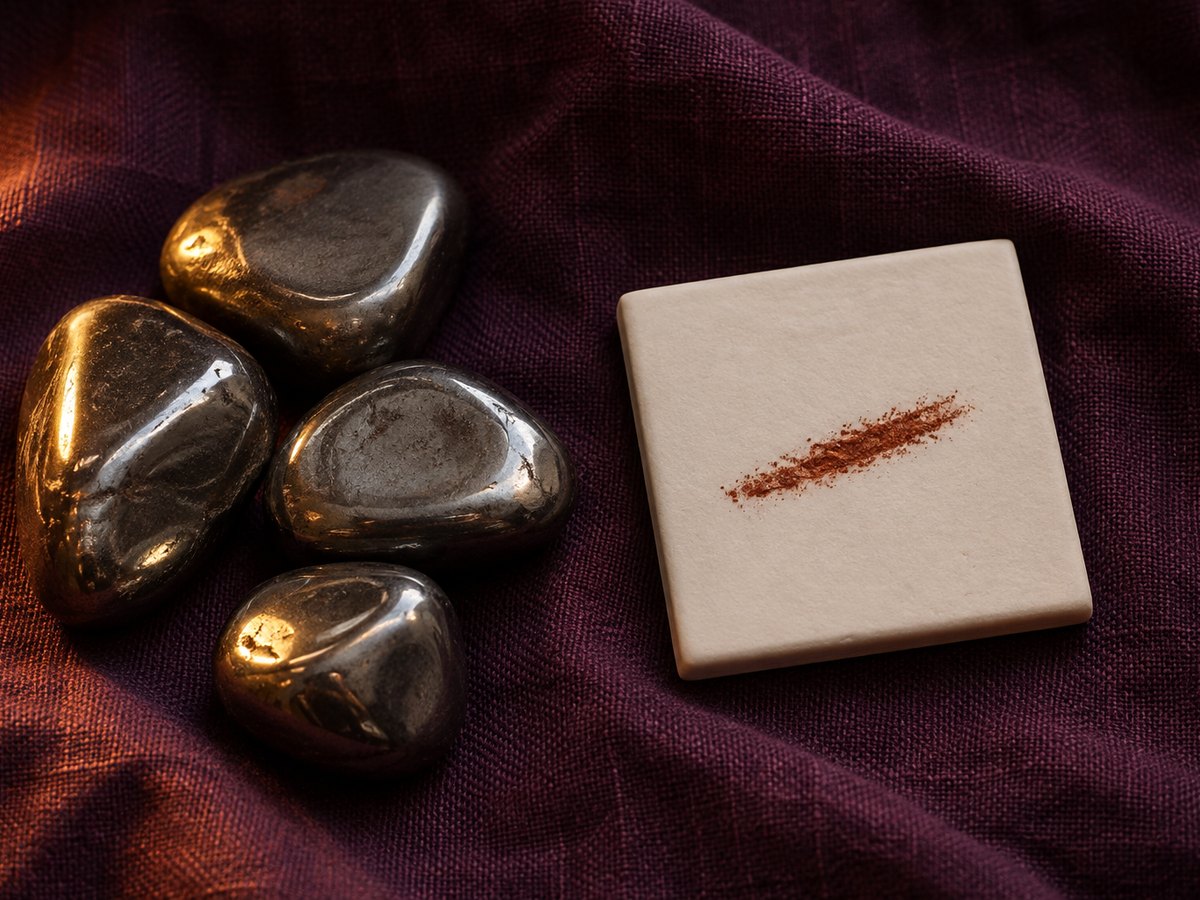
What it is: An iron oxide, the same mineral that colors red soil. According to the University of Minnesota's Common Minerals guide, its name comes from haima, the Greek word for blood, and every variety leaves a reddish-brown streak when rubbed on unglazed porcelain, even the shiny silver-black kind sold as tumbled stones. Geology.com lists its specific gravity at about 5.0 to 5.3, which is why it feels so heavy in the hand.
In tradition: Its weight makes it a favorite grounding stone. Many people carry a tumbled piece in a pocket and hold it when they want to feel steady and present.
Jet
What it is: Fossilized wood. According to the Malton Museum, jet is a type of lignite, the lowest rank of coal, and Whitby jet comes from the fossilized wood of an extinct tree. The Romans gathered much of it by beachcombing along the Yorkshire coast.
In tradition: Jet is one of the oldest protective materials on record, from Roman amulets onward. It is light, warm to the touch and soft, so it suits jewelry and small carvings more than display pieces.
How to spot fakes and treatments
Dark stones are easy to imitate, so a little know-how goes a long way.
- "Magnetic hematite" is usually not hematite. According to Fire Mountain Gems, most of what is marketed as magnetic hematite is a manufactured material sold as hematine or Hemalyke, and a strong pull to a magnet usually points to a man-made piece. Natural hematite is only weakly magnetic. The red-brown streak is the honest test.
- Very dark smoky quartz is often lab-colored. The Arkansas Geological Survey notes that most smoky quartz in local rock shops there is clear rock crystal that has been artificially irradiated. It is still quartz, but an honest seller will say so.
- Black glass can pose as obsidian. Eleven North's identification guide points out that color alone proves nothing, because manufactured black glass matches it. Natural obsidian tends to show faint swirls, flow lines and tiny stretched bubbles; perfectly round, evenly spaced bubbles and a seam suggest a molded piece.
- Black tourmaline should show grooves. Real schorl crystals have lengthwise striations. A smooth, shiny black "tourmaline" tumble with no texture deserves a second look.
How people use protection stones
There is no single right way, but these traditions come up again and again:
- At the threshold. A piece of black tourmaline or a smoky quartz point by the front door, as a symbolic "guard at the gate."
- The four corners. Some people set a small stone in each corner of a room or a property line, often while saying a short intention aloud.
- In a pocket or pouch. Hematite and tumbled tourmaline are popular carry stones.
- On an altar. Obsidian spheres and mirrors are traditional focus pieces for quiet reflection.
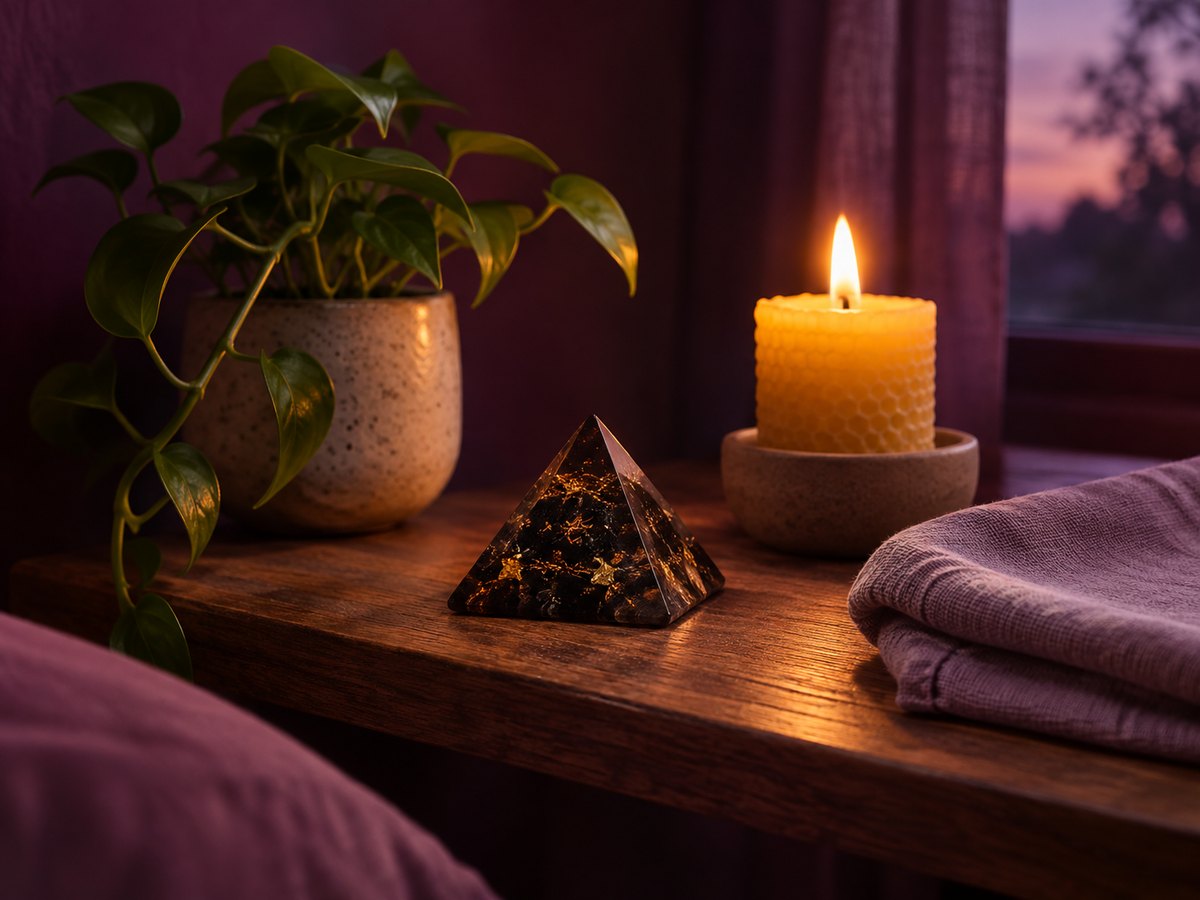
- In larger pieces. Some people also choose orgonite and sacred-geometry pieces for the same corner of the home. If that interests you, our iPyramids harmonizers section shows the gold-plated geometry and orgonite pieces in that collection.
Practitioners often "cleanse" protection stones more often than others, because of the belief that they hold on to what they block. Common methods are smoke from incense, the sound of a bowl or a night on a windowsill under the moon.
Care and safety
- Mind obsidian's edges. Raw obsidian and broken pieces can cut like a blade. Buy tumbled or polished shapes for pockets, and keep chipped pieces away from children.
- Keep hematite dry. It is iron oxide, so a quick wipe beats a soak. Pat it dry if it gets wet.
- Handle jet gently. It is soft and organic. A soft dry cloth is all it needs.
- Clean tourmaline simply. According to GIA, warm soapy water is the preferred way to clean tourmaline, and ultrasonic and steam cleaners are not recommended.
- Small stones are a choking hazard. Keep tumbled stones out of reach of small children and pets.
- Don't do the streak test on a piece you love. It leaves a scratch on the stone and a mark on the tile. Use a spare tumble.
Choosing your first protection stone
If you only want one, a raw black tourmaline stick is affordable, easy to identify and full of character. If you would rather carry something smooth, choose a natural hematite tumble and check the streak. If dark stones feel too heavy for your space, smoky quartz is the softer option. Whatever you choose, buy from a seller who names the mineral and any treatment, and let the stone be a daily reminder of the boundary you have chosen for yourself.
Quick answers
What is the most popular crystal for protection?
Black tourmaline is the most widely used protection stone in modern crystal practice, along with obsidian, smoky quartz and hematite. These are traditions and beliefs rather than proven effects, so the right choice is simply the stone that feels meaningful to you.
Is magnetic hematite real hematite?
Usually not. Most strongly magnetic "hematite" is a manufactured material sold as hematine or Hemalyke. Natural hematite is only weakly magnetic and always leaves a reddish-brown streak on unglazed porcelain.
Where should I put a protection crystal at home?
In crystal tradition, popular spots are beside the front door, in the corners of a room, on a desk or in a small pouch in your bag or car. Keep small tumbled stones out of reach of young children and pets.
Is very dark smoky quartz natural?
Sometimes, but not always. Smoky color forms naturally from gamma radiation acting on quartz with trace aluminum, and the same effect can be made in a lab. Geologists in Arkansas note that much smoky quartz in rock shops is clear quartz that was artificially irradiated. Ask the seller.