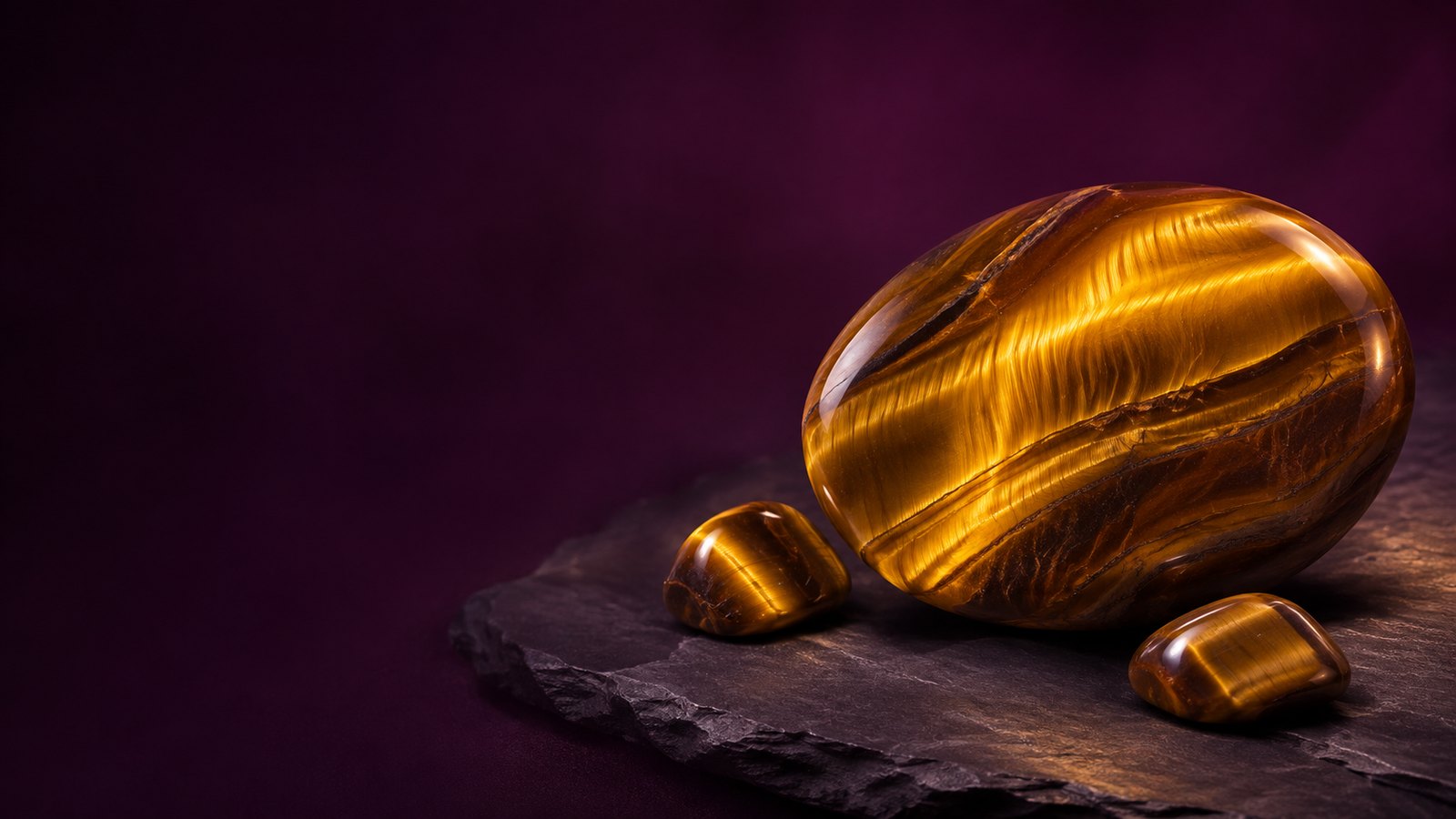
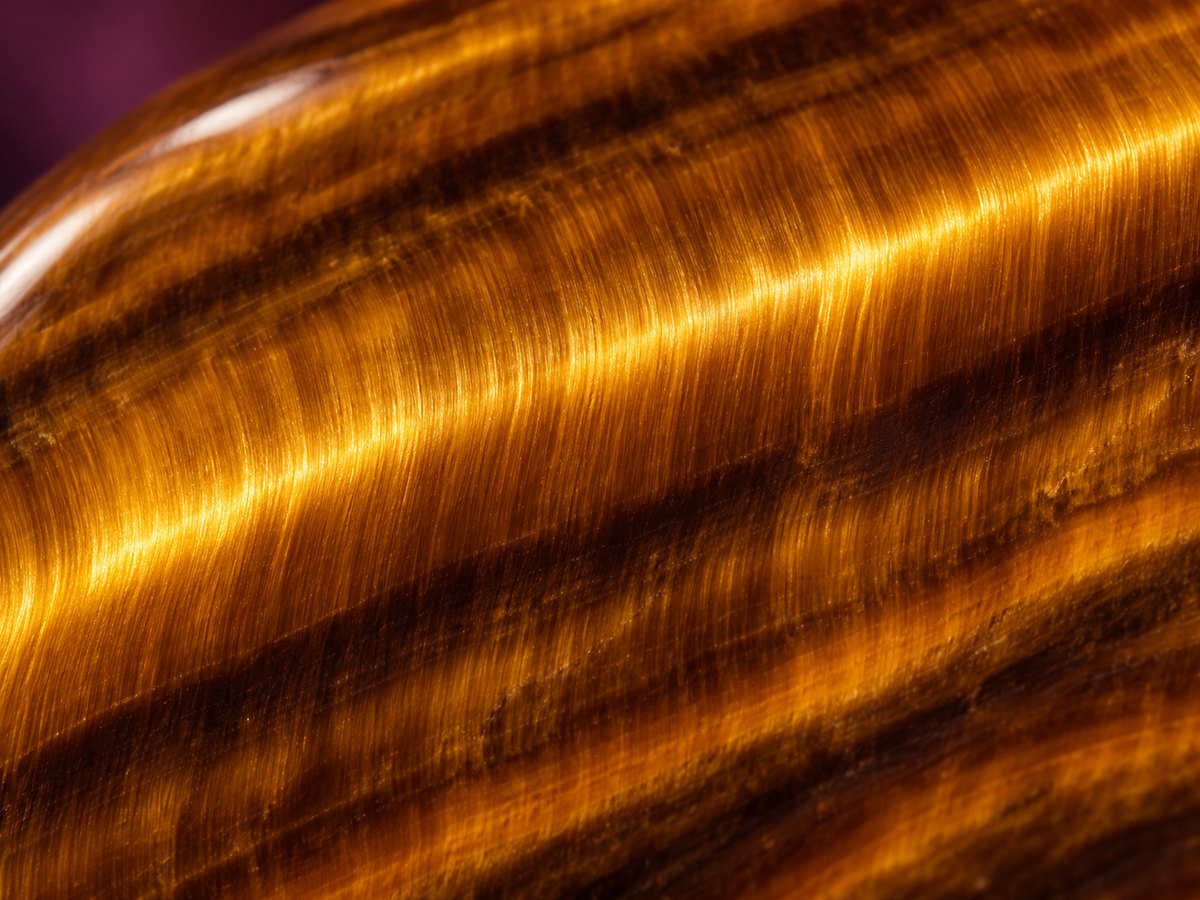
Tiger's Eye is one of the easiest crystals to fall for. Tilt a polished piece under a lamp and a band of golden light slides across the stone, the way light moves across a cat's eye in the dark. That moving shine has a name, chatoyancy, and the story behind it turned out to be more interesting than geologists believed for over a century.
What Tiger's Eye is
Tiger's Eye is a member of the quartz family, mostly silicon dioxide, threaded with fine fibers of a blue mineral called crocidolite. According to Deposits Magazine, an earth science publication, it has a hardness of 7 on the Mohs scale, a silky to glassy luster, and a shell-shaped or splintery fracture. That hardness puts it on par with quartz, so it is a tough, everyday stone for tumbled pieces, beads and carvings.
It comes in several colors. The classic stone is golden brown. A blue to blue-gray version is sold as hawk's eye, and red Tiger's Eye is common too. The same magazine reports that Tiger's Eye is mined commercially in South Africa, Australia, India, Myanmar, Brazil, China and the United States. It was once rare and costly, until a large find in Griqualand West, South Africa, made it the affordable stone most of us know today.

Chatoyancy: why the light moves
The word chatoyancy comes from the French word for cat, chat. Penn State University describes it as a band of reflected light or color that moves through a gem as you change its orientation. In every chatoyant gem, from Tiger's Eye to star sapphire, the cause is the same: fine, parallel fibers or needles inside the stone. Light catches along all those tiny parallel lines at once and gathers into one bright, shifting band.
That is why cutters usually shape Tiger's Eye into smooth domes, called cabochons, and round beads. A curved surface lets the band roll across the stone as you move it. A flat, poorly oriented cut can leave the shine looking weak or patchy.
The crocidolite story, rewritten
For more than a hundred years, textbooks told a tidy story. According to Penn State, geologists in the late 1800s believed Tiger's Eye was a pseudomorph, a "false form": quartz had slowly replaced fibrous crocidolite, a blue form of asbestos, copying the shape of its fibers. In golden Tiger's Eye, the theory went, the replacement was complete and rusted iron supplied the color. That idea dates to 1873 and went unchallenged for about 125 years.
Then Penn State geoscientists Peter Heaney and Donald Fisher took a closer look with optical microscopes, X-ray diffraction and transmission electron microscopes, and published their findings in the journal Geology in 2003. They found that the quartz had not replaced the fibers at all. Instead, the stone grew by what they call a crack-seal process. A quartz-rich rock containing some crocidolite cracks, mineral-rich water seeps in, quartz grows on the crack walls while crocidolite fibers grow across the gap, and the crack seals. Then the rock cracks again, slightly shifted, and the cycle repeats many times. As some of the iron in the crocidolite oxidizes, the stone turns the familiar browns and golds.
The surprising conclusion, in Heaney's words as reported by Penn State, is that the crocidolite, not the quartz, causes the shimmer. The wavy, variable chatoyancy in a piece of Tiger's Eye is actually a record of how the parent rock moved during ancient tectonic events. Many guides still repeat the old pseudomorph story.
Tiger's Eye meaning in crystal lore
Most of the stone's traditional meaning grows out of two images: the watchful eye of a big cat and the warm color of the sun. Both have deep roots.
According to the gem education site Gem Rock Auctions, Roman soldiers carried engraved Tiger's Eye stones for courage and protection, and ancient Egyptians linked the stone with their sun god, Ra. The same source notes that in Chinese tradition the tiger is a guardian king, which is why carved Tiger's Eye talismans have long been used as protective amulets. Treat the specifics as stories handed down and retold, not documented history.
In modern crystal tradition, Tiger's Eye is linked with:
- Courage and confidence. The stone of the tiger is a natural symbol of boldness.
- Focus and follow-through. Many people keep it as a reminder to stay on task and finish what they start.
- Protection. Like other "eye" stones, it carries the old idea of a watchful guardian.
- Grounded abundance. Its gold color ties it, in practitioners' eyes, to prosperity and steady effort.
In chakra tradition, Tiger's Eye is most often paired with the solar plexus, the yellow center associated with willpower, and in astrology lore it is usually connected with Leo and Capricorn. Hawk's eye, the blue form, is often described in lore as a stone of perspective and clear seeing. These are beliefs and symbols. The stone itself is quartz and fibers, and its meaning lives in what you bring to it.
How people use Tiger's Eye
- As a pocket stone. A smooth tumbled piece is easy to carry, and turning it to catch the light makes a simple, steadying ritual before a big day.
- As jewelry. Bead bracelets, cabochon rings and pendants are popular because the band of light moves as you do. Its hardness of 7 makes it practical for daily wear.
- In intention work. Some people hold Tiger's Eye while writing down a goal that takes courage, then leave it on top of the page.
For readers who like to wear their intentions, iPyramids makes crystal pendants and one-of-a-kind amulets; you can browse them in the wearable pieces, and a few are shown under this article's introduction.
Red Tiger's Eye, hawk's eye and imitations
Tiger's Eye is inexpensive, so outright fakes are less common than with pricier stones, but treatments and look-alikes are everywhere. Here is what to know.
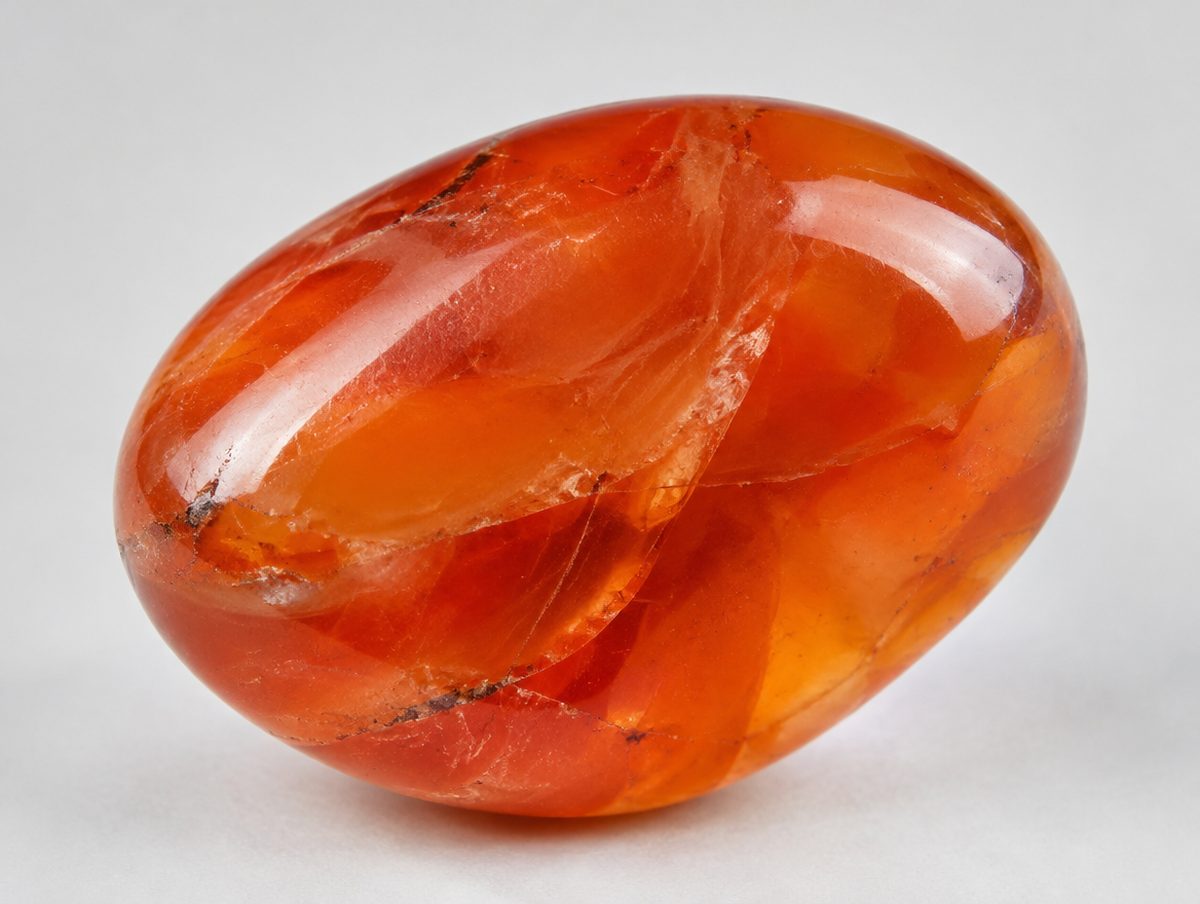
- Red Tiger's Eye is usually heated. Gemologist Kurt Nassau's overview of gemstone treatments, published by GIA, lists simple heating that turns yellow-to-brown chalcedony-family material red, naming Tiger's Eye among the results, and rates the color as stable. The same overview notes that Tiger's Eye is also sometimes bleached. Heated stones are real Tiger's Eye; the color simply isn't natural.
- Hawk's eye is real, not dyed. Penn State explains that the blue-green hawk's eye is the same formation with less-oxidized crocidolite. Bright pink, purple or green "Tiger's Eye," on the other hand, is dyed.
- Watch for cat's-eye glass. Wikipedia's gemstone entry notes that fiber optic glass is a common imitation of Tiger's Eye and comes in many colors. Vivid, unnatural colors and a perfectly uniform shine are the usual giveaways.
When you shop, ask to see the stone move. Real Tiger's Eye shows its band shifting as you turn it, and the bands usually wave and vary a little rather than running in perfect parallel lines.
How to cleanse and care for Tiger's Eye
Being quartz-hard, Tiger's Eye is one of the easier stones to look after. Wipe it with a soft cloth, or wash it in lukewarm water with a little mild soap, rinse, and dry it right away. Our guide to water-safe crystals explains why a brief rinse is fine for hard, stable stones while a long soak is rarely necessary. Skip harsh chemical cleaners, especially on dyed or heated pieces, and store it away from softer stones it could scratch.
Many people also cleanse Tiger's Eye in the energetic sense, with sunlight, sound or simple intention. A short time in the sun is a ritual many practitioners favor for this sun-linked stone, and it won't harm natural golden material.
Who should be careful
Because crocidolite is a form of asbestos, people sometimes worry about handling Tiger's Eye. Deposits Magazine is clear that it is not hazardous to wear or handle. The concern is dust. According to that article, cutting, grinding or polishing Tiger's Eye releases fine particles, both crocidolite fibers and quartz dust, that are hazardous to breathe. If you do lapidary work, use water or another lubricant to keep dust down, work with a properly rated respirator and good ventilation, and wash up afterward.
Keep small tumbled stones and beads away from young children and pets, who may swallow them. And like every crystal, Tiger's Eye is a symbol and a beautiful object, not a substitute for professional help when you need it.
Quick answers
What does Tiger's Eye mean?
In crystal lore, Tiger's Eye is linked with courage, focus, protection and grounded abundance, images drawn from the watchful eye of a big cat and the stone's sunny gold color. These are traditional meanings and symbols, not properties of the mineral.
Why does Tiger's Eye shine like a cat's eye?
The effect is called chatoyancy. Fine parallel fibers inside the stone reflect light together as one moving band. Penn State researchers found in 2003 that the crocidolite fibers, sealed in quartz through repeated cracking and refilling, cause the shimmer.
Is Tiger's Eye safe to wear?
Yes. Deposits Magazine notes it is not hazardous to wear or handle. The caution is for cutting, grinding or polishing, which can release fine crocidolite and quartz dust; lapidaries work wet and use a proper respirator.
Is red Tiger's Eye natural?
Usually it is real Tiger's Eye that has been heated. GIA's published overview of gem treatments lists heating that turns yellow-brown material red, including Tiger's Eye, as a common, stable treatment. Bright pink, purple or green pieces are dyed.